


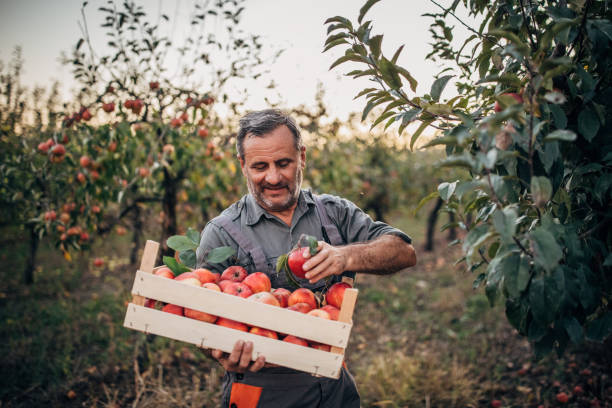
Plywood for agricultural packaging plays a key role in the protection, handling, and transportation of fruit, vegetables, and other agricultural products. However, in many cases, plywood selection is still based solely on price, without considering how it can impact production efficiency, packaging quality, or logistics costs over the medium and long term.
In an increasingly competitive market, where success depends on optimizing processes and reducing operational issues, packaging should be regarded as a technical component of the production chain rather than simply a container.The strength of the packaging, its dimensional stability, its performance in humid environments, and the ease with which the plywood can be machined all have a direct influence on the productivity of packaging manufacturers and on preserving product quality throughout transportation and distribution.Since 1984, CATENVA has been manufacturing poplar and pine plywood panels for industrial applications, with a strong focus on the fruit and vegetable industry. Our role goes beyond manufacturing plywood—we develop solutions tailored to each application while controlling every stage of the production process to ensure consistent quality, reliable supply, and complete traceability. This experience enables us to advise every customer on selecting the most suitable plywood according to the intended application, working conditions, and production requirements.Why is plywood the best choice for agricultural packaging?
The agricultural industry works with products that are particularly sensitive to handling and transportation. Packaging designed for stone fruit, citrus fruits, vegetables, or seasonal produce must withstand stacking loads, continuous handling, temperature fluctuations, and varying humidity levels without compromising the integrity of its contents. For this reason, the material used to manufacture the packaging has a direct impact not only on product quality but also on the efficiency and profitability of the entire logistics chain.Plywood stands out because it combines light weight, mechanical strength, and excellent dimensional stability. These characteristics result from its multilayer construction, where wood veneers are bonded together with alternating grain directions. This cross-laminated structure significantly improves resistance to mechanical stresses while reducing the risk of deformation compared with many other engineered wood products.At CATENVA, we primarily manufacture poplar and pine plywood, two species that offer different technical advantages depending on the application.Poplar plywood provides an outstanding balance between weight and strength, allowing manufacturers to produce lightweight packaging without sacrificing the structural performance required to withstand the demands of agricultural transportation. The resulting reduction in packaging weight can contribute to lower logistics costs, particularly when handling thousands of boxes throughout an entire harvesting season.Pine plywood, on the other hand, is an excellent choice when the final application requires greater mechanical performance or must withstand more demanding working conditions. Selecting between poplar and pine always depends on the specific application, packaging design, and customer requirements. For this reason, evaluating all technical factors before production begins is essential.One of the most common misconceptions is assuming that all plywood panels deliver the same level of performance. In reality, factors such as veneer quality, manufacturing process control, dimensional tolerances, and internal panel construction have a significant influence on machining performance and long-term durability. Two plywood panels that appear similar at first glance can produce substantial differences in productivity, material waste, and the overall quality of the finished packaging.When plywood lacks sufficient dimensional stability, deformation may occur, making automatic box assembly more difficult, causing poor fitting, or increasing the number of rejected components. These issues have a direct impact on production times and generate additional costs that often far exceed the savings achieved by choosing a supplier based solely on purchase price.At CATENVA, we believe that plywood should always be engineered to meet the specific requirements of each project. We evaluate the application, machining processes, environmental conditions, and customer expectations in order to manufacture a product that improves production efficiency while ensuring reliable packaging performance throughout its entire service life.Technical characteristics required for plywood used in fruit and vegetable packaging
How plywood selection influences production and logistics costs
In many companies, the cost of plywood is still evaluated solely in terms of its purchase price per panel or per square metre. However, this limited perspective often leads to decisions that ultimately increase the total cost of packaging once production begins.Selecting plywood for agricultural packaging simply because it has a lower purchase price frequently results in problems that become apparent over time. A panel with poor dimensional stability may create deviations during machining, forcing manufacturers to reduce production line speeds in order to avoid assembly errors. Likewise, inconsistencies between production batches make it more difficult to maintain consistent quality and require continuous adjustments to manufacturing equipment.These seemingly minor issues have a cumulative impact. A higher number of defective parts increases rework, production downtime, and raw material consumption. In addition, if the packaging fails to provide the expected level of strength during transportation, logistics incidents may lead to product damage, customer complaints, returns, and significant financial and reputational losses.It is also common for manufacturers to overlook the importance of defining the final application before selecting the plywood. Not all agricultural boxes are subjected to the same loads, humidity conditions, or handling requirements. Choosing a plywood panel without first analysing these factors can either result in unnecessary overengineering—which increases packaging weight and logistics costs—or in an underperforming solution that shortens service life and compromises transport safety.Light weight is another strategic consideration. During harvesting seasons, when thousands of boxes are transported every day, even small weight reductions per unit can translate into considerable savings in fuel consumption, handling costs, and transport efficiency. This is one of the reasons why poplar plywood has become one of the preferred materials within the fruit and vegetable packaging industry. Its excellent strength-to-weight ratio allows manufacturers to reduce packaging weight without compromising the structural performance required for demanding agricultural applications.At CATENVA, we believe that the profitability of agricultural packaging should never be measured solely by the initial cost of the plywood. Our objective is to manufacture solutions that optimize the entire production process by minimizing operational issues, reducing material waste, and ensuring consistent quality throughout every supply batch.Every plywood panel we produce is designed to improve our customers' productivity and help prevent problems that often only become apparent once packaging enters production or products are already moving through the logistics chain.Custom manufacturing and certifications: the key to a reliable supply
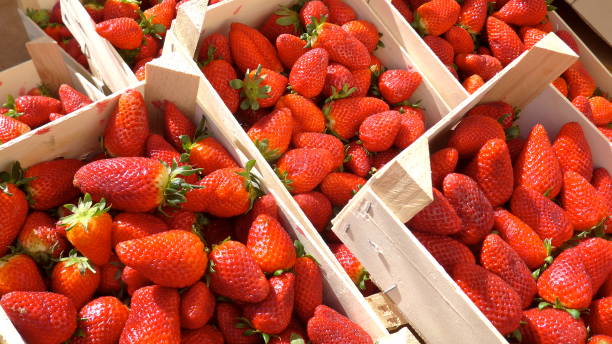 Within the packaging industry, high-quality plywood is only part of the solution. Equally important is working with a manufacturer capable of guaranteeing consistent supply, uniform quality between production batches, and the flexibility to adapt products to each customer's specific requirements. When any of these factors fail, the consequences often appear in the form of production delays, machining problems, or difficulties maintaining consistent packaging quality throughout the agricultural season.At CATENVA, we understand that every packaging manufacturer operates with different production processes, machinery, and technical requirements. For this reason, we do not view plywood as a standard commodity but as a technical solution designed to meet the specific demands of each application. We manufacture poplar and pine plywood panels in customized dimensions, thicknesses, and specifications, allowing our customers to integrate the material into their production processes with maximum efficiency.This level of customization becomes particularly valuable in automated manufacturing environments. Plywood with inconsistent thicknesses or poorly controlled tolerances can require continuous machine adjustments, reduce productivity, and increase the percentage of rejected components. While these issues may appear insignificant individually, repeating them across thousands of units can have a substantial impact on manufacturing costs and delivery schedules.Traceability has also become increasingly important within the agri-food industry. Manufacturers need to know the origin of their raw materials and work with suppliers that maintain strict control over every stage of the production process. This information provides confidence during audits, simplifies documentation management, and strengthens trust among both domestic and international customers.Alongside internal quality controls, certifications provide additional assurance that manufacturing processes comply with recognised standards and are subject to regular verification. Depending on the application, it may be appropriate to consider certifications such as ISO 9001 for quality management systems, as well as PEFC and FSC® certifications, which verify that the wood originates from responsibly managed forests. These certifications should not be viewed merely as documentary requirements but as valuable tools for reinforcing traceability and confidence throughout the supply chain. You can find more information on our quality and environment page.When agricultural packaging is intended for specialised applications, it is also important to assess whether additional requirements apply to the intended end use. In these cases, working with a manufacturer capable of providing technical guidance helps avoid misunderstandings and reduces the risk of selecting plywood that may not ultimately meet project specifications.Another aspect that is often overlooked is supply reliability. During peak agricultural seasons, demand for packaging can increase dramatically over a short period of time. Any interruption in plywood supply not only affects packaging manufacturers but may also disrupt the entire fruit and vegetable supply chain. For this reason, we carefully plan our production to provide dependable delivery schedules, consistent quality between batches, and stable supply throughout the season.From our experience as plywood manufacturers, we know that long-term collaboration delivers far greater value than a simple purchasing transaction. By analysing each application together with our customers, understanding their production requirements, and adapting the plywood accordingly, we help reduce operational issues before they occur, optimize production costs, and improve the overall performance of agricultural packaging.