When a “cheap” plywood panel fails, it rarely does so because of what is visible on the surface. The problem is usually inside: voids between veneers, hidden knots, irregular overlaps, or areas with uneven density that do not appear on the outer face… until it’s time to cut, machine, or assemble.
In precision manufacturing (laser cutting, CNC, die cutting, fine milling, industrial marquetry, or tight-tolerance production runs), these internal defects become a real cost: rejected parts, extra adjustment time, irregular burning, breakage during assembly, or even batches that simply cannot be delivered.
That is why a concept increasingly relevant to industry, design, and manufacturing exists: “laser grade” plywood. It is not just a “nice name”: it is a practical way of referring to plywood designed to provide uniform internal layers, minimal voids, reliable bonding, and stable behavior when the process demands precision.
What are “voids” and “hidden knots” in plywood and why do they matter so much?
In plywood panels, quality does not depend only on the visible face. It also depends on the quality of the inner veneers. In lower-grade plywood, it is common to find:
- Internal voids (gaps between veneers)
- Hidden knots covered by outer layers
- Irregular internal overlaps and joints
- Areas with variable thickness due to poorly calibrated veneers
- Bonding defects (insufficient adhesive, poor distribution, or inadequate pressing)
These defects often go unnoticed until the panel is subjected to a demanding process: laser cutting, aggressive machining, secondary bonding, bending, lacquering, or tight-tolerance assembly.
The hidden cost of voids in cheap plywood
The cost is not just the price of the panel. The real cost is measured in:
1) Part loss in laser cutting and CNC
In precision manufacturing, every panel must behave predictably. When plywood contains internal voids or density variations, cutting stops being uniform.
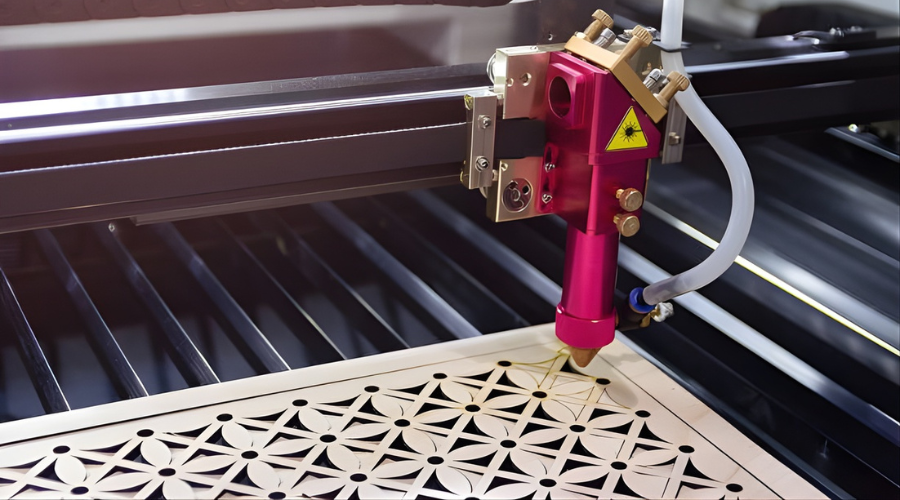
In laser cutting, an internal void can cause overburning in areas with less mass, as the beam encounters less resistance. At the same time, density changes between layers may generate irregular edges, kerf (cut width) variations, and loss of definition in small geometries or fine details.
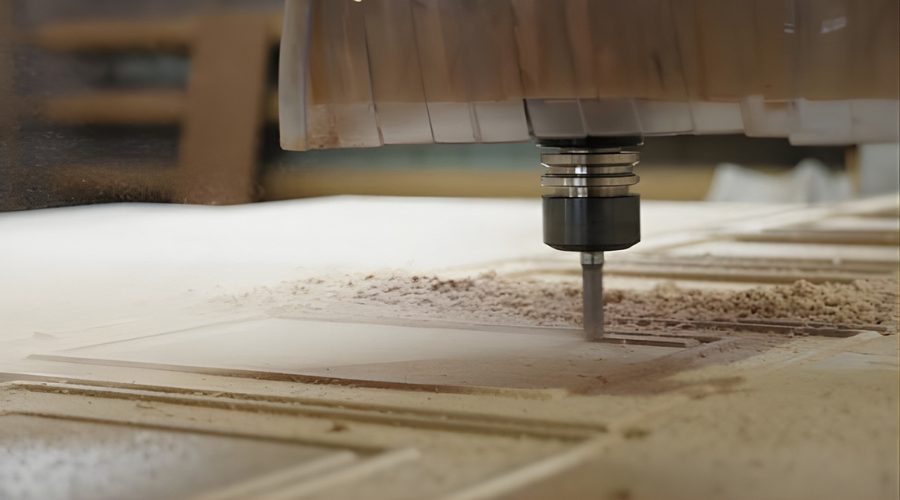
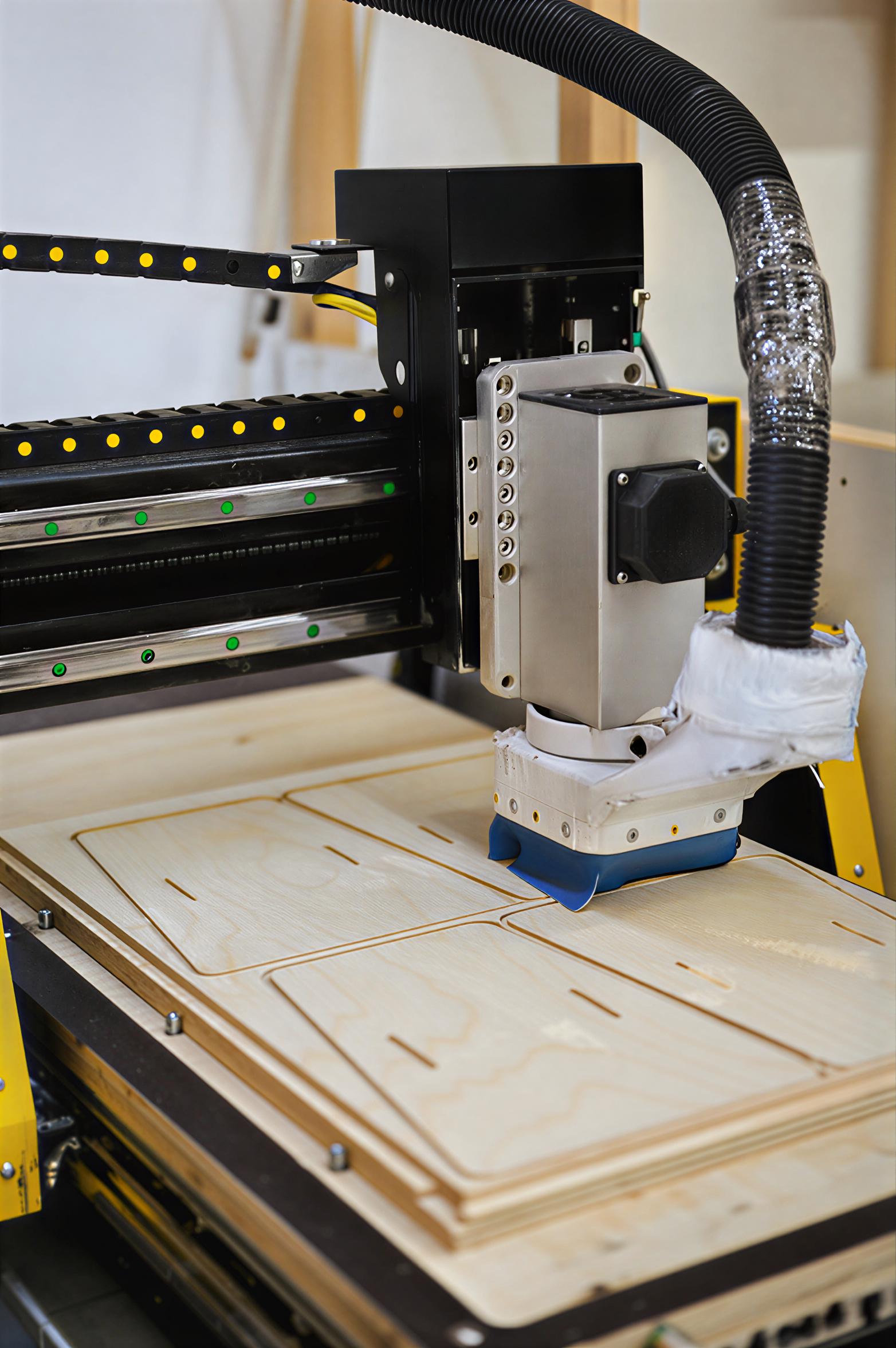
In CNC machining, something similar happens. Internal voids can cause unexpected chipping, especially on edges or delicate areas. In parts with narrow ribs, tabs, or precision joints, an internal discontinuity may cause breakage during machining or reduce structural strength once the part is finished. The result is scrap, rework, and reduced productivity.
2) More setup time and less repeatability
When the material is not uniform, the process is no longer repeatable. In laser cutting, it is common for power and speed parameters to work correctly in one area of the panel and fail in another due to internal variations. This forces additional calibration time, more power and speed tests, and parameter adjustments every time the batch changes.
In industrial environments, where efficiency depends on process stability, this lack of repeatability directly impacts costs. More setup time means less productive time, greater uncertainty in delivery schedules, and increased difficulty in standardizing manufacturing. What initially seemed like savings in panel cost ultimately translates into higher operational costs.
3) Assembly and durability issues
A panel with internal voids may pass cutting without visible defects but fail later during assembly. If a void coincides with a structurally critical area, joints may give way, tabs may not fit properly, or certain points may not provide the expected strength.
In applications requiring mechanical fasteners, a screw may encounter an area with insufficient real density, leading to reduced anchoring capacity. Additionally, in demanding or load-bearing uses, edge breakage may occur, compromising the durability of the final product. This affects both perceived quality and service life.
4) Inconsistent finishes
The internal uniformity of plywood also affects surface finishing. When areas of different density or irregular internal layers exist, the absorption of lacquers, varnishes, or stains may vary. The result is uneven tones, absorption differences, or “patchy” areas that require additional coats to compensate.
Why “laser grade” plywood is key for precision manufacturing
Laser-grade plywood is essential in precision manufacturing because it is designed to provide stable and uniform performance in demanding processes such as laser cutting and CNC machining.
This type of panel aims to ensure:
- Internal layers with fewer defects
- Minimal voids and open knots
- Stable and repeatable thickness across the entire panel
- Reliable bonding that reduces the risk of delamination
The result is a material with predictable cutting and machining performance, allowing constant parameters to be maintained and scrap to be reduced. Ultimately, it means working with a panel that supports the production process instead of forcing you to compensate for material irregularities.
How hidden knots and voids affect laser cutting of plywood
Laser cutting is especially sensitive because it “reads” the material in real time: when density changes, results change.
Typical problems with plywood containing voids in laser cutting
- More burned edges in softer areas or near voids
- Incomplete cuts in denser areas requiring rework
- Marks or shadows on the underside due to irregular beam exit
- Increased carbonization in areas with inconsistent bonding or internal defects
- Small parts breaking when removed from the panel due to lack of real “body”
If your production depends on time per part, any deviation multiplies.
Veneer selection: why the process matters to avoid irregular internal layers
In plywood manufacturing, a critical part of quality comes from veneer quality and uniformity. When an internal veneer has defects, the panel inherits that problem.
In general terms, minimizing voids and internal variations requires a robust process that typically includes:
1) Raw material selection and defect control
Plywood quality begins with raw material selection. An internal veneer with structural defects directly transfers that problem to the final panel. A rigorous selection process significantly reduces the presence of large knots, cracks, resin pockets, or degraded areas that can become internal voids or weak points. Controlling these defects from the beginning results in a more uniform and stable core, improving reliability in machining, cutting, and final use.
2) Properly controlled veneer peeling
The peeling process is crucial to ensuring uniformity and continuity. Well-controlled peeling directly influences thickness uniformity, fiber continuity, dimensional stability, and bonding surface quality.
If internal veneers show thickness variations, “bridges” or areas without real contact between layers may form, increasing the risk of internal voids and causing less homogeneous bonding. In precision manufacturing, this regularity is essential to avoid unpredictable behavior during cutting or machining.
3) Core composition and internal joint control
In panels where the core is composed of multiple pieces or internal joints, controlling alignment, overlaps, repairs, and veneer continuity makes a critical difference.
Careful core composition maintains internal cohesion and reduces discontinuities that affect strength or cutting finish. Poor composition may generate irregularities only detected during machining or assembly. Ultimately, core control distinguishes a panel that merely “meets minimum standards” from one suitable for precision manufacturing processes.
The critical difference between interior and exterior adhesives in plywood for laser cutting
 This point is often underestimated, yet it is decisive in manufacturing.
Why does the type of adhesive matter in laser-cutting plywood?
Because the adhesive influences:
- Cohesion between veneers (delamination resistance)
- Behavior under humidity or temperature changes
- Performance when the part is machined or subjected to stress
In general:
- Interior adhesives: designed for dry indoor environments. Not intended for prolonged exposure to moisture or demanding conditions.
- Exterior adhesives: formulated to provide greater resistance to moisture and harsher conditions, maintaining bonding integrity in more demanding scenarios.
How does this translate in practice?
In laser or CNC processes, inadequate bonding may create issues that directly affect final part quality and durability. Layer separation may appear after cutting, especially in thin or delicate geometries, as well as edges that “open” or show delamination.
In addition, bonding not suited to the intended use may reduce panel stability under humidity changes during storage or transport, increasing the risk of deformation or later assembly issues. When the goal is precision manufacturing with consistent results, selecting the correct adhesive type according to final use is not a secondary detail, but an essential reliability requirement.
CATENVA and plywood for precision manufacturing
When a customer looks for plywood for laser cutting, they are not simply buying a panel: they are buying repeatability, edge quality, reduced scrap, and stable processes.
If your production depends on precision, the most efficient approach is to work with a supplier who can help you select:
- The right panel (more uniform core)
- The optimal thickness for your design
- The appropriate bonding type depending on final use (interior/exterior)
- Samples to validate your cutting process and parameters
If you are experiencing irregular cuts, scrap due to voids, or unstable results between batches, contact CATENVA. Tell us about your application (laser, CNC, production runs, tolerances), and we will guide you in choosing the most suitable plywood for your manufacturing process.
Frequently asked questions about plywood voids and “laser grade”
What are internal voids in plywood?
They are gaps between internal veneers that may result from core composition defects, irregular joints, or insufficient contact/bonding. They can affect strength, finishing, and cutting performance.
Why can cheap plywood have “hidden knots”?
Because internal layers may contain defects that are covered by outer veneers. The issue becomes visible during machining, cutting, or when tight tolerances are required.
What does “laser grade” mean?
It generally refers to plywood designed for demanding processes such as laser cutting, featuring greater core uniformity, fewer voids, and more stable and repeatable performance in manufacturing.
Does adhesive type influence laser cutting?
Yes. Adhesive affects layer cohesion and panel stability. In thin parts or delicate geometries, inadequate bonding can increase delamination and edge failures.