


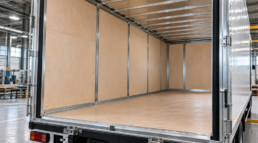
Lightweight plywood for transport applications: how to reduce weight without creating production problems
In transport applications, reducing weight is a common priority, but it should not become the only criterion when selecting a plywood panel. A lighter material can help optimise payload, facilitate handling or reduce the mass of certain components. However, if it does not provide sufficient dimensional stability, strength or machining consistency, the initial saving can quickly be transferred to production in the form of adjustments, rework, rejected parts or longer assembly times.For this reason, the choice of lightweight plywood for transport applications should be based on the end use rather than on weight alone. At CATENVA, we analyse factors such as the weight-to-strength ratio, moisture, machinability, tolerances, face quality and subsequent finishing requirements in order to adapt the plywood to the customer's production process. The objective is to ensure that the solution performs consistently during manufacturing and does not require problems to be corrected once the component has already entered production.
1. What lightweight plywood for transport applications needs to provide
Lightweight plywood for transport applications should not be selected simply because it weighs less. In vehicle bodies, industrial vehicle conversions, technical furniture, interior linings, auxiliary components or logistics-related solutions, reducing weight can offer significant advantages, but only when that reduction does not create subsequent problems involving strength, stability, machining or assembly.
For an industrial company, the relevant question is not simply how many kilograms a plywood panel weighs. The decision should also consider whether the material maintains sufficiently consistent geometry, whether it can be machined repeatedly, whether it can withstand the expected service requirements and whether its faces allow subsequent finishing operations to be carried out correctly. Consistency between batches must also be considered, because a component integrated into serial production needs to behave predictably.
For transport applications, lightweight plywood needs to balance five important variables: weight, strength, dimensional stability, machinability and compatibility with the production process. Reducing one of these variables without controlling the others can turn an apparent purchasing optimisation into an increase in total cost.
One of the most common mistakes is selecting a panel according to price and weight without defining the application in sufficient detail. Two plywood panels with similar dimensions and thicknesses may behave differently when they are machined, fitted with fasteners, subjected to vibration or processed through lacquering, laminating or covering operations. Assuming that all plywood panels are the same makes it more difficult to anticipate this behaviour and increases the risk of having to make corrections once the material is already in production.
The financial impact can then appear at several stages. A panel that requires more preparation increases finishing hours. A material that causes splintering can reduce CNC productivity. A component with dimensional variations may require adjustments during assembly. If the defect is detected only after fittings, coverings or other components have already been added, the cost of rework increases further.
At CATENVA, we have been manufacturing poplar and pine plywood since 1984 and approach these projects from an industrial perspective. We analyse the end use, machining requirements, production demands and quality requirements before defining a solution. Our custom plywood manufacturing
approach is not simply a matter of changing dimensions: it involves adapting the plywood so that it integrates more effectively into the customer's process.
If a company is qualifying a new material, reducing weight in a vehicle or seeking greater consistency on a machining line, the plywood should be assessed as part of the complete application rather than on the basis of a single property.
2. How strong should lightweight plywood for transport be?
Lightweight plywood does not need to provide the maximum possible strength. It needs to provide the appropriate level of strength for the function it will perform. Overspecifying a component can unnecessarily increase weight and cost, while working below the actual requirements can lead to deformation, damage during service or the need to incorporate additional reinforcement.
The relationship between weight and strength is therefore one of the main selection criteria in transport applications. Plywood construction, with veneers arranged in alternating directions, helps distribute stresses and provides dimensional stability. However, actual performance depends on factors such as composition, thickness, wood species and the type of load involved.
For this reason, lightweight plywood for transport applications should be evaluated according to how the component will actually perform in service. An interior lining does not have the same requirements as a surface subjected to concentrated loads, frequent fastening, vibration or impact. Nor should a specification used for another vehicle or project automatically be applied when dimensions, design or service conditions are different.
Simply choosing the lowest-density plywood available may create an apparent saving. If reinforcement then needs to be added, the number of fasteners increased, geometries modified or components replaced, the original cost reduction disappears. The correct calculation should consider the cost of the finished component rather than only the price per square metre.
Consistency also has a direct impact on production. When mechanical behaviour and machining remain within predictable parameters, it is easier to standardise speeds, tools, fastening systems and assembly operations. When variability is too high, production has to compensate through additional inspections and manual adjustments.
This difference becomes more significant in long production runs. A few additional seconds per component, a small percentage of rejected parts or a slight decrease in machine output can have a much greater financial impact than a moderate difference in the purchase price of the plywood.
At CATENVA, we work with poplar and pine plywood and adapt the solution according to the requirements of each project. There is no single configuration that is suitable for every transport application. The correct solution depends on the target weight, the required strength, fastening system, machining requirements and operating conditions.
When a customer's objective is to reduce mass without compromising component reliability, we recommend analysing the weight-to-strength balance before finalising the specification. This is particularly relevant in sectors such as caravans and motorhomes, where you can find more information in our article on poplar plywood in caravan design
3. How moisture and dimensional stability affect transport applications
Dimensional stability is a key factor when plywood has to be integrated with machined parts, profiles, fittings or coverings. Wood is a hygroscopic material and can exchange moisture with its surroundings. Although plywood construction improves stability through its cross-laminated veneer arrangement, storage, machining and service conditions still need to be controlled.
In lightweight plywood for transport applications, variations in moisture can lead to dimensional changes, misalignment between drilled holes, assembly difficulties or loss of uniformity in lacquered, laminated or covered surfaces. When these issues appear after machining or finishing, production times increase together with the cost of rework.
Moisture and dimensional stability should therefore be evaluated according to the actual service conditions. The objective is not to eliminate every variation inherent to wood, but to work with plywood that is sufficiently consistent to make the production process predictable and compatible with manufacturing tolerances.
At CATENVA, we control our production process and treat traceability and consistency as part of the industrial solution. This predictability helps reduce adjustments, additional inspections and the risk of problems affecting subsequent operations.
4. Why machining and tolerances determine the real cost of plywood
In an industrial application, the purchase price of the plywood is only one part of the total cost. Cutting, CNC machining, milling, drilling, edge preparation, fittings and assembly can represent a greater expense if the material does not provide consistent machinability. Splintering, edge defects or variations between components increase cycle times, tool wear and rework.
Tolerances should also be defined according to the function of the component. When a dimension affects an assembly, fastening point or subsequent covering operation, a deviation can affect both assembly and production planning. For this reason, with lightweight plywood for transport applications, machining requirements and tolerances should be considered from the specification stage.
At CATENVA, we manufacture customised solutions and analyse how the plywood will subsequently be processed, including CNC machining, fastening systems, final geometries and finishes. Adapting the solution to the production process can help reduce waste, handling and machine time.
The decision should be based on total cost. A less expensive plywood panel is no longer the lower-cost option if it creates additional machining time, more waste or more components requiring rework. For this reason, performance should be validated under representative conditions before approving a solution for recurring production.
5. How face quality, adhesion and finishes influence performance
In transport applications, the surface quality of the plywood can influence both the final finish and transformation costs. If a component is going to be painted, lacquered, laminated or covered, an unsuitable face may require additional sanding, filling or preparation and increase processing time.
Adhesion should also be assessed as part of the complete system. The performance of an adhesive, paint or laminate depends on the surface, the product being applied and the processing conditions. For lightweight plywood for transport applications, it is therefore advisable to define from the outset which finish will be applied and what level of surface quality is actually required.
When a defect appears after finishing, the cost increases because machine hours, coatings and handling have already been consumed. The correct level of quality is not necessarily the highest available, but the one that achieves the required result without creating unnecessary operations or rework.
At CATENVA, we analyse surface and finishing requirements together with the final application. This customised manufacturing approach helps balance purchase cost, transformation cost and final quality.
6. Uses of plywood in transport applications
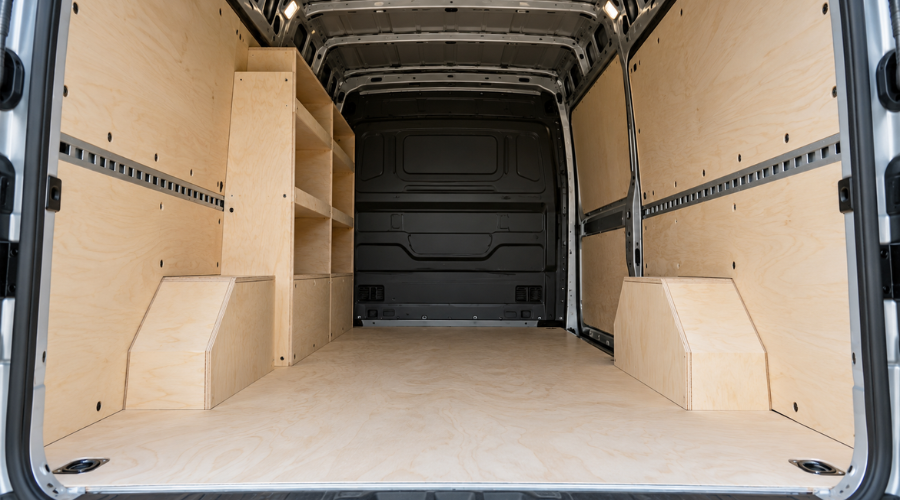
Plywood can be used in different elements of industrial vehicles and transport solutions where the objective is to combine light weight, strength, ease of machining and dimensional stability. Applications may include interior linings, side panels, partitions, technical furniture components, auxiliary structures, flooring and elements integrated into vehicle bodies and specialist conversions.
It can also be used in commercial vehicles, converted vans, trailers and transport solutions where the overall weight affects payload capacity or ease of assembly. In these applications, lightweight plywood for transport applications makes it possible to work with custom-machined components adapted to specific geometries, fastening systems and finishes.
The choice of plywood always depends on the specific function. A panel intended for interior lining will have different requirements from a component subjected to loads, vibration, impact or moisture. Similarly, a visible surface may require a higher face quality, while a structural or auxiliary component may prioritise strength, stability or machining performance.
At CATENVA, we analyse each application before defining the solution. We adapt dimensions, composition, machining and finishing according to the end use so that the plywood responds both to the vehicle requirements and to the needs of the production process.

7. How to choose lightweight plywood for transport
The selection process should begin before requesting a price. To correctly define lightweight plywood for transport applications, it is necessary to understand the function of the component, the target weight, its dimensions, how it will be machined, the type of fasteners it will receive, the finish that will be applied and the environmental conditions to which it will be exposed.
Expected production volume and supply frequency should also be considered. A technically suitable solution may not be the best option for recurring production if there is insufficient consistency between batches or if supply conditions do not fit the customer's production planning.
Machining information is particularly useful. If the component includes milling, drilling, radii, recesses or CNC geometries, knowing these requirements from the outset makes it easier to assess machinability. The same applies to surfaces: if the plywood will ultimately be lacquered, laminated or covered, this should be defined before determining the required face quality.
For purchasing departments, this information makes it possible to compare quotations more realistically. For engineering teams, it helps ensure that the material is aligned with the design. For production, it reduces the risk of receiving plywood that later requires unforeseen adaptations. For quality departments, it facilitates the definition of incoming inspection criteria and the maintenance of documentary traceability.
Selecting according to price without first defining these variables can result in a misleading comparison. Two proposals may specify the same format and thickness but will not necessarily generate the same cost once they have been machined and assembled. The correct option is the one that helps keep the total cost of the component under control.
Documentation should be assessed using the same approach.
PEFC certification and FSC certification may be relevant where responsible sourcing and chain-of-custody requirements apply. Quality management requirements may also involveISO 9001.Depending on the end use, other EN or UNE standards may also need to be verified. The applicable documentation should always be assessed according to the specific project.
At CATENVA, quality, traceability and certification form part of our industrial approach. More information about our environmental and quality commitments is available on our Quality and Environment page.
A customer qualifying a new plywood panel can provide us with information about the application, dimensions, target weight, machining requirements, type of finish, moisture or exposure conditions, approximate production volume and required documentation. With this information, we can assess the project much more accurately than by starting only from a thickness and target price.
This technical exchange is also useful when a production problem already exists. If deformation, excessive rework, CNC difficulties, variation between batches or excessive surface preparation time occur, reviewing how the plywood is currently specified can help identify potential areas for improvement.
At CATENVA, we manufacture, control and adapt plywood solutions for industrial applications. Our objective is not to propose the plywood with the highest possible specification, but the solution that best responds to the customer's process and end use.
8. Lightweight plywood should be selected according to its end use
Lightweight plywood for transport applications provides value when weight reduction is combined with appropriate strength, dimensional stability, good machinability, moisture control and surface quality compatible with subsequent processing.
Incorrect selection can create a chain of consequences that goes far beyond the cost of the plywood itself. It can increase CNC machining times, generate more waste, make assembly more difficult, create rework and affect final quality. If the issue reaches a completed vehicle, the costs of dismantling, replacement, transport and complaint management may also have to be added.
By contrast, defining the plywood correctly from the outset helps maintain more stable manufacturing rates, reduce manual intervention and improve process predictability. This is why plywood panels should not be assumed to be identical and why the decision should not be based exclusively on price, weight or thickness.
At CATENVA, we manufacture customised plywood panels and advise industrial companies on adapting the product to its end use. We analyse machining, stability, strength, finishing, traceability and supply conditions so that the material fits the customer's production process.
If you are qualifying new lightweight plywood for transport applications, want to reduce weight in an existing solution or are experiencing machining, stability or consistency issues,contact our technical team.We can review the project requirements with you before defining the solution.
Frequently Asked Questions
1. Which plywood is most suitable when reducing weight is the priority in transport applications?
It depends on the function of the component. Poplar plywood can be particularly interesting for projects where light weight is a priority, but strength, thickness, machining, fastening systems and service conditions should also be evaluated. Selection should not be based on density alone.
2. Is lightweight plywood necessarily less resistant?
Not necessarily. Strength depends on the composition, thickness, construction of the plywood and the type of stress to which it will be subjected. It is therefore more useful to analyse the weight-to-strength ratio of the complete solution rather than simply comparing the weight of two plywood panels.
3. What should be validated before approving plywood for serial production?
Machining performance, dimensional stability, relevant tolerances, face quality, moisture conditions, fastening systems, subsequent finishing requirements and the required consistency between deliveries should all be assessed. Wherever possible, validation should reproduce actual production conditions.
4. What information does CATENVA need to assess custom plywood for transport applications?
The more information available about the application, dimensions, machining requirements, target weight, finish, environmental conditions, production volume and documentation requirements, the more accurately we can define the solution. The plywood should be specified according to the production process and end use, not only according to its format.


Plywood for Agricultural Packaging
Plywood for agricultural packaging plays a key role in the protection, handling, and transportation of fruit, vegetables, and other agricultural products. However, in many cases, plywood selection is still based solely on price, without considering how it can impact production efficiency, packaging quality, or logistics costs over the medium and long term.
In an increasingly competitive market, where success depends on optimizing processes and reducing operational issues, packaging should be regarded as a technical component of the production chain rather than simply a container.
The strength of the packaging, its dimensional stability, its performance in humid environments, and the ease with which the plywood can be machined all have a direct influence on the productivity of packaging manufacturers and on preserving product quality throughout transportation and distribution.
Since 1984, CATENVA has been manufacturing poplar and pine plywood panels for industrial applications, with a strong focus on the fruit and vegetable industry. Our role goes beyond manufacturing plywood—we develop solutions tailored to each application while controlling every stage of the production process to ensure consistent quality, reliable supply, and complete traceability. This experience enables us to advise every customer on selecting the most suitable plywood according to the intended application, working conditions, and production requirements.
Why is plywood the best choice for agricultural packaging?
The agricultural industry works with products that are particularly sensitive to handling and transportation. Packaging designed for stone fruit, citrus fruits, vegetables, or seasonal produce must withstand stacking loads, continuous handling, temperature fluctuations, and varying humidity levels without compromising the integrity of its contents. For this reason, the material used to manufacture the packaging has a direct impact not only on product quality but also on the efficiency and profitability of the entire logistics chain.
Plywood stands out because it combines light weight, mechanical strength, and excellent dimensional stability. These characteristics result from its multilayer construction, where wood veneers are bonded together with alternating grain directions. This cross-laminated structure significantly improves resistance to mechanical stresses while reducing the risk of deformation compared with many other engineered wood products.
At CATENVA, we primarily manufacture poplar and pine plywood, two species that offer different technical advantages depending on the application.
Poplar plywood provides an outstanding balance between weight and strength, allowing manufacturers to produce lightweight packaging without sacrificing the structural performance required to withstand the demands of agricultural transportation. The resulting reduction in packaging weight can contribute to lower logistics costs, particularly when handling thousands of boxes throughout an entire harvesting season.
Pine plywood, on the other hand, is an excellent choice when the final application requires greater mechanical performance or must withstand more demanding working conditions. Selecting between poplar and pine always depends on the specific application, packaging design, and customer requirements. For this reason, evaluating all technical factors before production begins is essential.
One of the most common misconceptions is assuming that all plywood panels deliver the same level of performance. In reality, factors such as veneer quality, manufacturing process control, dimensional tolerances, and internal panel construction have a significant influence on machining performance and long-term durability. Two plywood panels that appear similar at first glance can produce substantial differences in productivity, material waste, and the overall quality of the finished packaging.
When plywood lacks sufficient dimensional stability, deformation may occur, making automatic box assembly more difficult, causing poor fitting, or increasing the number of rejected components. These issues have a direct impact on production times and generate additional costs that often far exceed the savings achieved by choosing a supplier based solely on purchase price.
At CATENVA, we believe that plywood should always be engineered to meet the specific requirements of each project. We evaluate the application, machining processes, environmental conditions, and customer expectations in order to manufacture a product that improves production efficiency while ensuring reliable packaging performance throughout its entire service life.
Technical characteristics required for plywood used in fruit and vegetable packaging

The performance of agricultural packaging depends on far more than its design or geometry. The way the plywood behaves during machining, assembly, storage, and transportation is essential to ensuring an efficient production process and reliable protection for fresh produce.
One of the most important properties is dimensional stability. During agricultural campaigns, packaging may be stored under a wide range of environmental conditions before being used. Variations in humidity and temperature affect all natural materials, making it essential to manufacture plywood panels capable of maintaining their dimensions within specified tolerances. When this stability is lacking, warping or deformation can occur, making assembly more difficult, increasing production times, and creating the need for rework that ultimately reduces productivity.
Mechanical strength is another critical factor. Agricultural packaging must withstand stacking loads, transportation stresses, and continuous handling throughout the logistics chain. If the plywood does not provide sufficient strength, failures may occur that compromise both the packaged goods and the reputation of the packaging manufacturer. However, achieving greater strength does not necessarily require increasing packaging weight. One of the main advantages of poplar plywood is its ability to offer an excellent balance between light weight and structural performance, enabling manufacturers to optimize packaging without increasing transport costs.
Machinability also plays a decisive role. Manufacturers of agricultural boxes rely on production lines where cutting, drilling, routing, and punching operations must be carried out continuously and with high precision. A homogeneous plywood panel ensures consistent machining performance, reduces tool wear, and improves the quality of the finished product. By contrast, irregular materials reduce production efficiency, increase machine downtime, accelerate tool consumption, and raise overall operating costs.
Another aspect that is often underestimated is the surface quality of the plywood faces. When packaging includes printed graphics, branding, product identification, or other surface finishes, a smooth and uniform surface significantly improves the adhesion of inks, coatings, and varnishes. Ignoring this factor can result in aesthetic defects that negatively affect product presentation at the point of sale and lead to unnecessary rejects.
Performance in humid environments also deserves careful consideration. Although no plywood panel is suitable for every environmental condition, it is important to select a solution that has been designed for the actual requirements of the intended application. Storage, handling, and transportation frequently expose packaging to changing humidity levels, making it essential to verify that the selected plywood will maintain its structural and dimensional performance throughout the logistics cycle.
At CATENVA, every stage of the manufacturing process is carefully controlled to ensure consistent product quality and to adapt each plywood panel to the specific requirements of every customer. We manufacture tailor-made solutions because we understand that the demands of packaging for exported fruit are not necessarily the same as those for domestic distribution or for products with different handling requirements. This approach enables us to provide a reliable supply together with consistent performance from one production batch to another—an essential requirement for manufacturers operating highly automated production lines.
How plywood selection influences production and logistics costs
In many companies, the cost of plywood is still evaluated solely in terms of its purchase price per panel or per square metre. However, this limited perspective often leads to decisions that ultimately increase the total cost of packaging once production begins.
Selecting plywood for agricultural packaging simply because it has a lower purchase price frequently results in problems that become apparent over time. A panel with poor dimensional stability may create deviations during machining, forcing manufacturers to reduce production line speeds in order to avoid assembly errors. Likewise, inconsistencies between production batches make it more difficult to maintain consistent quality and require continuous adjustments to manufacturing equipment.
These seemingly minor issues have a cumulative impact. A higher number of defective parts increases rework, production downtime, and raw material consumption. In addition, if the packaging fails to provide the expected level of strength during transportation, logistics incidents may lead to product damage, customer complaints, returns, and significant financial and reputational losses.
It is also common for manufacturers to overlook the importance of defining the final application before selecting the plywood. Not all agricultural boxes are subjected to the same loads, humidity conditions, or handling requirements. Choosing a plywood panel without first analysing these factors can either result in unnecessary overengineering—which increases packaging weight and logistics costs—or in an underperforming solution that shortens service life and compromises transport safety.
Light weight is another strategic consideration. During harvesting seasons, when thousands of boxes are transported every day, even small weight reductions per unit can translate into considerable savings in fuel consumption, handling costs, and transport efficiency. This is one of the reasons why poplar plywood has become one of the preferred materials within the fruit and vegetable packaging industry. Its excellent strength-to-weight ratio allows manufacturers to reduce packaging weight without compromising the structural performance required for demanding agricultural applications.
At CATENVA, we believe that the profitability of agricultural packaging should never be measured solely by the initial cost of the plywood. Our objective is to manufacture solutions that optimize the entire production process by minimizing operational issues, reducing material waste, and ensuring consistent quality throughout every supply batch.
Every plywood panel we produce is designed to improve our customers' productivity and help prevent problems that often only become apparent once packaging enters production or products are already moving through the logistics chain.
Custom manufacturing and certifications: the key to a reliable supply
 Within the packaging industry, high-quality plywood is only part of the solution. Equally important is working with a manufacturer capable of guaranteeing consistent supply, uniform quality between production batches, and the flexibility to adapt products to each customer's specific requirements. When any of these factors fail, the consequences often appear in the form of production delays, machining problems, or difficulties maintaining consistent packaging quality throughout the agricultural season.
At CATENVA, we understand that every packaging manufacturer operates with different production processes, machinery, and technical requirements. For this reason, we do not view plywood as a standard commodity but as a technical solution designed to meet the specific demands of each application. We manufacture poplar and pine plywood panels in customized dimensions, thicknesses, and specifications, allowing our customers to integrate the material into their production processes with maximum efficiency.
This level of customization becomes particularly valuable in automated manufacturing environments. Plywood with inconsistent thicknesses or poorly controlled tolerances can require continuous machine adjustments, reduce productivity, and increase the percentage of rejected components. While these issues may appear insignificant individually, repeating them across thousands of units can have a substantial impact on manufacturing costs and delivery schedules.
Traceability has also become increasingly important within the agri-food industry. Manufacturers need to know the origin of their raw materials and work with suppliers that maintain strict control over every stage of the production process. This information provides confidence during audits, simplifies documentation management, and strengthens trust among both domestic and international customers.
Alongside internal quality controls, certifications provide additional assurance that manufacturing processes comply with recognised standards and are subject to regular verification. Depending on the application, it may be appropriate to consider certifications such as ISO 9001 for quality management systems, as well as PEFC and FSC® certifications, which verify that the wood originates from responsibly managed forests. These certifications should not be viewed merely as documentary requirements but as valuable tools for reinforcing traceability and confidence throughout the supply chain. You can find more information on our quality and environment page.
When agricultural packaging is intended for specialised applications, it is also important to assess whether additional requirements apply to the intended end use. In these cases, working with a manufacturer capable of providing technical guidance helps avoid misunderstandings and reduces the risk of selecting plywood that may not ultimately meet project specifications.
Another aspect that is often overlooked is supply reliability. During peak agricultural seasons, demand for packaging can increase dramatically over a short period of time. Any interruption in plywood supply not only affects packaging manufacturers but may also disrupt the entire fruit and vegetable supply chain. For this reason, we carefully plan our production to provide dependable delivery schedules, consistent quality between batches, and stable supply throughout the season.
From our experience as plywood manufacturers, we know that long-term collaboration delivers far greater value than a simple purchasing transaction. By analysing each application together with our customers, understanding their production requirements, and adapting the plywood accordingly, we help reduce operational issues before they occur, optimize production costs, and improve the overall performance of agricultural packaging.
How to choose the right plywood for each agricultural application
Selecting plywood for agricultural packaging should never be based solely on purchase price or immediate product availability. Every application presents different operating conditions and requires careful evaluation of multiple factors to ensure that the finished packaging performs reliably throughout its service life.
The first consideration should always be the final destination of the packaging. Manufacturing boxes for domestic fruit distribution is very different from producing packaging intended for export markets or products that will remain in storage for extended periods. Transportation, handling, and storage conditions all determine the technical properties required and influence whether poplar plywood or pine plywood is the most suitable choice.
Another essential factor is the manufacturing process itself. When production lines operate at high speed, the dimensional consistency of the plywood becomes critical. A homogeneous material improves machining performance, increases assembly precision, and reduces tool wear. Conversely, inconsistencies between panels or production batches require continuous machine adjustments, slow production, and increase the likelihood of manufacturing errors.
It is equally important to assess how the plywood will perform under the humidity conditions expected throughout the logistics cycle. Although plywood generally offers excellent performance thanks to its cross-laminated structure, every project should be evaluated individually to determine the most appropriate solution. Anticipating environmental conditions helps prevent deformation and ensures dimensional stability from manufacturing through to final use.
The surface quality of the plywood should also receive careful attention. When packaging incorporates printed branding, product identification, or decorative finishes, the surface appearance directly affects the final result. A smooth, uniform surface improves ink adhesion and coating performance, enhances product presentation, and reduces the number of components rejected for cosmetic reasons.
One of the most common mistakes is assuming that all plywood manufacturers produce panels with identical characteristics. In reality, veneer selection, moisture control, manufacturing tolerances, and production consistency all have a direct impact on the performance of the finished product. Choosing a supplier based solely on purchase price can lead to problems that only become apparent once production has started—when correcting them becomes considerably more expensive.
For this reason, we always recommend evaluating the total cost of ownership, rather than focusing exclusively on the purchase price of the plywood. A material that minimizes production issues, improves machining efficiency, delivers consistent quality, and reduces customer complaints will ultimately provide far greater value than the initial savings achieved by selecting the lowest-cost option.
At CATENVA, we advise every customer from the earliest stages of their project to identify the most appropriate solution according to the type of packaging, manufacturing process, and target market. This collaborative approach enables us to manufacture custom poplar and pine plywood panels tailored to each application, helping customers increase productivity, reduce waste, and produce reliable, competitive agricultural packaging.
If your company is looking to optimize the production of agricultural packaging or develop a new packaging solution, our technical team is ready to help you identify the plywood that best meets your project's specific requirements. You may also be interested in our article about custom industrial plywood manufacturing.
Manufacturers of poplar and pine plywood panels
Plywood for agricultural packaging is much more than simply a material used to manufacture fruit and vegetable boxes. It is a technical component whose quality directly influences productivity, logistics efficiency, product protection, and the overall profitability of the manufacturing process.
Choosing the right plywood means reducing production issues, minimizing rework, improving machining efficiency, and maintaining consistent quality throughout production. Conversely, selecting plywood based solely on purchase price—or without properly assessing the final application—can generate hidden costs that ultimately affect both packaging manufacturers and agricultural producers.
Since 1984, CATENVA has been manufacturing poplar and pine plywood panels, tailoring every solution to the real needs of its customers. We control every stage of the manufacturing process, operate according to strict quality and traceability standards, and provide technical guidance to ensure that every project benefits from the most suitable plywood for its intended application.
Because we believe that high-quality packaging starts long before the box is manufactured—it starts with selecting the right plywood.
If you are planning to develop a new fruit and vegetable packaging solution or improve the performance of your current production process, contact our technical team. We will analyse your application and help you find the plywood solution that best meets your specific requirements.
Frequently Asked Questions
Why is poplar plywood widely used for agricultural packaging?
Because it offers an excellent balance between light weight and mechanical strength, is easy to machine, and enables the production of efficient packaging for transporting and handling fruit and vegetables.
When should pine plywood be used?
Pine plywood is recommended when the application requires higher mechanical performance or greater structural strength. The most appropriate choice always depends on the intended end use and the technical requirements of the project.
What are the advantages of custom-manufactured plywood?
Custom plywood allows dimensions, thicknesses, and technical characteristics to be adapted to the customer's manufacturing process, improving machining efficiency, reducing material waste, and increasing overall productivity.
Which certifications should be considered when selecting a plywood manufacturer?
Depending on the application, it is advisable to verify certifications such as ISO 9001 for quality management systems and PEFC or FSC® certifications to confirm the responsible origin of the wood. Additional certifications may also be required depending on the intended use of the plywood.
Custom Industrial Plywood Manufacturer for Industrial Applications
Choosing a custom industrial plywood manufacturer for industrial applications is a decision that directly impacts the quality of the final product, production efficiency, and the overall profitability of any project. In sectors such as industrial packaging, construction, transportation, the agri-food industry, technical furniture, and industrial carpentry, plywood panels should not be considered a generic raw material, but rather a technical solution designed to meet specific application requirements.However, it is still common to find projects where plywood panels are selected solely based on price or immediate availability.
This approach often leads to problems that only become apparent during production, including machining difficulties, deformation, material waste, quality issues, and manufacturing delays. What initially appears to be a cost-saving measure frequently results in higher operating costs and reduced competitiveness.Plywood panels offer well-known advantages in industrial applications thanks to their combination of strength, lightweight properties, and dimensional stability. Nevertheless, to fully benefit from these characteristics, the product must be adapted to the specific requirements of each application.
At CATENVA, we have been manufacturing plywood panels since 1984, and we understand that the needs of an industrial packaging company differ significantly from those of a technical furniture manufacturer or a transportation company. For this reason, customization, technical support, and process control are essential factors in ensuring reliable and consistent results.
Why Customization Is Essential in Industrial Plywood Panels
Industrial plywood panels are used in environments where performance requirements are often demanding. Although two projects may appear to use the same material, their actual operating conditions can be completely different. This is one of the main reasons why customization has become a critical factor in achieving satisfactory results.
When the final application is not properly defined, companies often select panels that fail to meet the project's real requirements. This is especially common when purchasing decisions are based exclusively on economic criteria. The problem arises once the panel enters production and begins to reveal limitations related to machining, dimensional stability, or required mechanical strength.
The primary cause is usually a lack of preliminary analysis. Every industry has specific requirements concerning mechanical loads, environmental humidity, dimensional tolerances, surface finishes, and downstream manufacturing processes. Ignoring these factors can lead to deviations that negatively affect both the product and the production process.
The consequences can be significant. An unsuitable panel may require additional adjustments, increase material waste, and cause issues during assembly or end-use operations. In mass production environments, these seemingly minor deviations often multiply as production volumes increase.
The solution lies in adapting dimensions, thicknesses, core composition, face quality, and finishes to the actual conditions of use. Custom manufacturing makes it possible to optimize panel performance according to the customer's objectives while minimizing the risks associated with generic solutions.
From an economic perspective, this strategy also delivers benefits. A panel designed for a specific application reduces rework, improves productivity, and facilitates process standardization. As a result, the total project cost is often lower than that of an apparently cheaper but technically inadequate alternative.
Problems Associated with Using Standard Panels in Industrial Applications
One of the most common mistakes in industry is assuming that all plywood panels perform similarly. Although they may appear equivalent on the surface, differences in composition, quality, manufacturing methods, and production control can lead to very different results.
A frequent issue arises when machining requirements are not properly evaluated. Many industrial applications involve cutting, routing, drilling, or CNC machining operations. If the panel is not designed to withstand these processes efficiently, defects increase, tool wear accelerates, and non-productive time rises.
Another critical aspect is face quality. When the final product requires painting, printing, laminating, or coating, surface characteristics become extremely important. Poor panel selection can lead to visible defects, adhesion problems, and additional surface preparation costs.
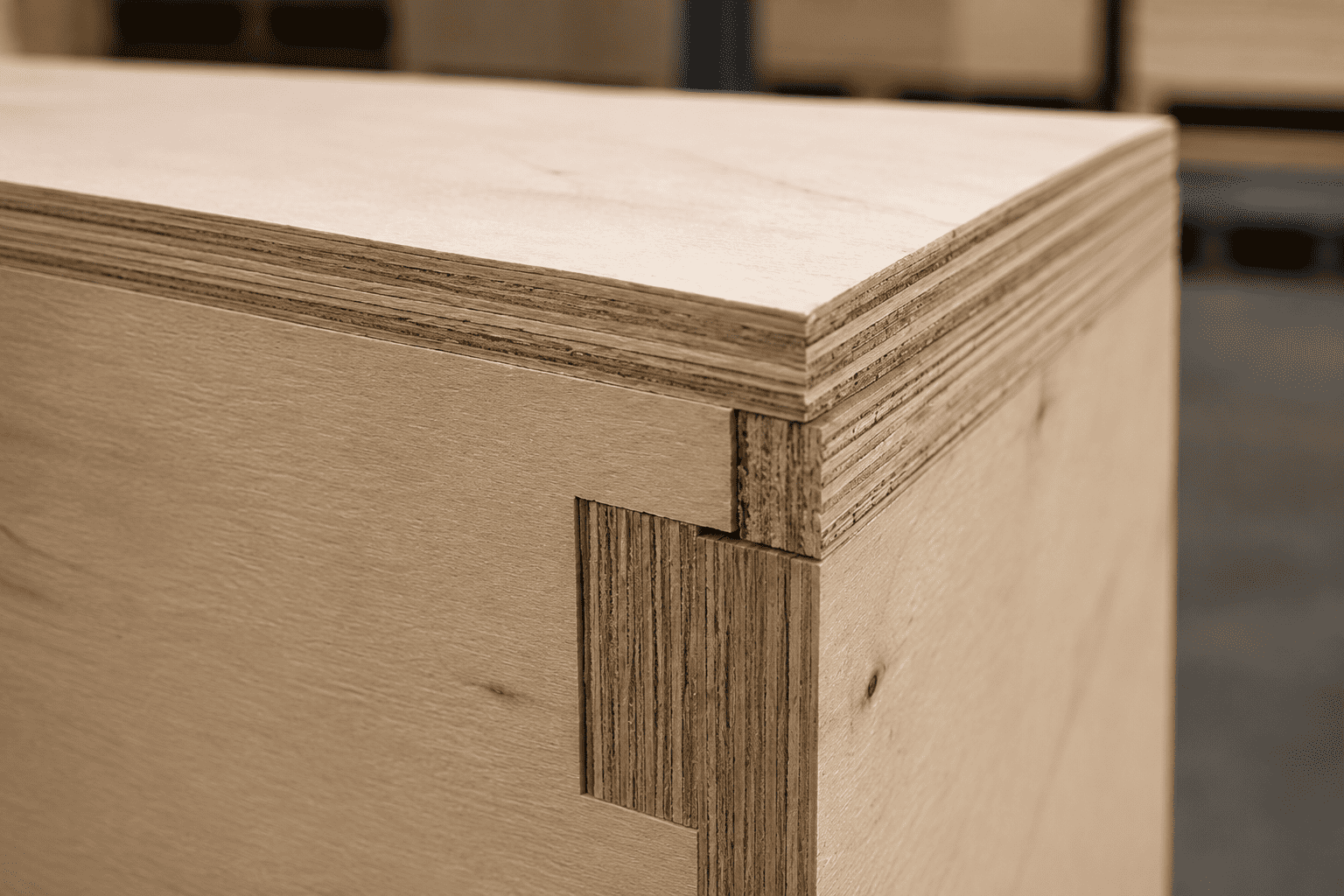
Moisture is another common source of problems. Although plywood is known for its dimensional stability, it remains a wood-based product whose performance is influenced by environmental conditions. If moisture is not properly controlled during storage, transportation, or installation, deformation may occur, affecting both functionality and appearance.
In demanding industrial applications, it is also common to overlook the tolerances required for proper assembly. Small dimensional variations can create cumulative problems that impact the entire production line.
The economic consequences often extend far beyond the initial material cost. Companies frequently face increased expenses related to returns, delays, claims, waste, and productivity losses. For this reason, plywood panel selection should be viewed as a strategic decision rather than a simple procurement purchase.
Technical Criteria for Selecting a Custom Industrial Plywood Panel
Selecting a custom industrial plywood panel should always begin with a detailed analysis of the final application. The more accurate the analysis, the greater the opportunity to optimize costs and ensure consistent results.
One of the first factors to evaluate is the required mechanical strength. Depending on the end use, the panel may be subjected to static loads, impacts, vibrations, or continuous stresses. The internal structure and configuration of the panel must be designed to meet these demands throughout its service life.
Dimensional stability is another essential criterion. In industrial applications, maintaining consistent dimensions is critical for assembly accuracy and product quality. Variations caused by changes in temperature or humidity can directly affect productivity and generate additional costs.
Weight should also be carefully considered. In industries such as transportation and industrial packaging, the strength-to-weight ratio directly influences logistics costs and operational efficiency. Selecting a panel that delivers the required performance without unnecessary weight can provide significant competitive advantages.
Machinability is another key factor. A panel that performs consistently during processing allows for more precise finishes, reduced machining times, and lower tool wear. This aspect is particularly important in automated production environments.
Finish requirements must also be analyzed. Depending on the application, paints, laminates, printed surfaces, or specialized coatings may be required. In such cases, surface quality and panel uniformity directly influence the final result.
Finally, applicable regulatory and documentation requirements should be verified. Depending on the industry and destination market, certifications related to quality, sustainability, traceability, or safety may be necessary. Certifications such as ISO 9001, PEFC, or FSC can provide valuable assurance for specific projects and approval processes.
How Custom Manufacturing Impacts Costs, Quality, and Productivity
There is a common perception that customization automatically increases costs. However, when the overall impact on production is considered, the reality is often quite different.
The main limitation of standard panels is that production processes must be adapted to the available material. This creates constant adjustments, increases operational complexity, and raises the risk of errors. In contrast, when a panel is specifically designed for a particular application, the product adapts to the process.
This difference has a direct effect on productivity. Fewer adjustments mean faster production, improved repeatability, and reduced downtime. In addition, greater material consistency simplifies quality control and helps stabilize manufacturing operations.
Product quality also improves significantly. A panel designed for specific operating conditions behaves more predictably during machining, assembly, and final use. This reduces defects, minimizes returns, and improves customer satisfaction.
Another particularly important advantage is the reduction of rework. When problems arise due to an incorrect panel specification, the solution often involves repairs, replacements, or modifications that consume valuable time and resources. These costs are rarely considered during the initial purchase but can represent a substantial portion of the total project cost.
From a financial perspective, custom manufacturing optimizes investment. Instead of purchasing a standard product and later dealing with its limitations, companies receive a solution aligned with their actual requirements. This improves planning, increases profitability, and reduces operational uncertainty.
At CATENVA, we follow this philosophy by analyzing each application to develop plywood panels tailored to the required levels of strength, machinability, dimensional stability, and finishing performance.
The Importance of Traceability, Certification, and Process Control
The quality of a plywood panel depends on more than its physical properties. In increasingly demanding industrial sectors, traceability and process control have become essential elements in ensuring supply reliability.
One of the main risks for industrial buyers is inconsistency between production batches. Significant variations in product characteristics can increase manufacturing issues and complicate planning. This problem is often the result of insufficient process control or poor supply chain management.
Traceability enables manufacturers to identify material origins and monitor every stage of the production process. This facilitates problem resolution, improves responsiveness, and provides confidence to customers operating under strict quality requirements.
Certifications also play an important role. Beyond their commercial value, they provide objective evidence that specific procedures are carried out according to recognized standards. In many industries, these certifications form part of supplier approval and auditing requirements.
Likewise, responsible forest resource management has become increasingly important in the market. Depending on the application, certifications such as PEFC or FSC may be relevant, as they verify specific conditions related to raw material sourcing and chain of custody.
Production control also has a direct impact on final product quality. Maintaining stable manufacturing parameters helps ensure consistent tolerances, improves supply reliability, and reduces the risk of deviations that could affect customers.
How a Custom Industrial Plywood Manufacturer Adds Value to Industrial Projects
Choosing an industrial supplier should not be based solely on the ability to provide materials. In demanding applications, true value lies in the technical expertise required to understand customer needs and transform them into an optimized solution.
A specialized manufacturer actively participates in product definition. This includes analyzing factors such as strength, moisture exposure, dimensional stability, machinability, finishing requirements, and regulatory compliance before production begins. This analysis phase is essential for preventing future problems and maximizing performance.
Experience also helps identify risks that may go unnoticed during the design stage. Seemingly minor aspects, such as storage conditions or machining requirements, can significantly influence the performance of the final product.
Another key differentiator is adaptability. Markets evolve continuously, and companies need suppliers capable of responding to changing requirements without compromising quality or supply consistency. Custom manufacturing provides the flexibility needed to address these changes successfully.
At CATENVA, we manufacture poplar and pine plywood panels tailored to the specific needs of each customer. We control the production process, analyze operating conditions, and provide technical guidance to develop solutions that deliver real value to sectors such as industrial packaging, construction, transportation, the agri-food industry, and technical furniture manufacturing.
Conclusion
Choosing a custom industrial plywood manufacturer for industrial applications involves much more than selecting a material supplier. It means partnering with a technical expert capable of adapting products to real operating conditions, reducing operational risks, and improving overall production efficiency.
Decisions based solely on price often generate hidden costs related to rework, defects, waste, and productivity losses. By contrast, when a plywood panel is designed with factors such as strength, dimensional stability, moisture conditions, machinability, and finishing requirements in mind, the result is a more efficient, reliable, and cost-effective solution.
At CATENVA, we have been manufacturing plywood panels since 1984 and work closely with our customers to develop solutions tailored to each industrial application. If you are looking for a custom industrial plywood manufacturer for industrial applications, our team can help you identify the most suitable solution according to your technical, production, and regulatory requirements.
FAQ
What are the advantages of a custom industrial plywood panel?
Custom plywood panels can be tailored in terms of dimensions, thickness, composition, and finishes to meet specific project requirements, improving productivity and reducing operational issues.
How does machining influence plywood panel selection?
Performance during cutting, routing, drilling, or CNC operations directly affects product quality, production efficiency, and tool life.
Why is dimensional stability important?
Dimensional stability helps maintain consistent tolerances and prevents assembly problems caused by changes in humidity or temperature.
Which certifications should be considered for industrial applications?
Depending on the end use, relevant certifications may include ISO 9001, PEFC, FSC, or other industry-specific standards and compliance requirements.
Standard vs. Custom Plywood Panel Sizes: Optimizing Production Efficiency in Industrial Carpentry
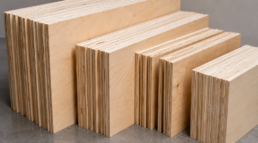
The usual result is not immediate, but cumulative: material waste, unnecessary machining time, dimensional stability issues, and increased rework. Choosing correctly between standard and custom sizes is not a commercial matter, but a technical one.
At CATENVA, we work daily with companies facing production issues directly derived from this decision. That is why understanding when a standard panel is sufficient and when custom manufacturing is required becomes a key factor in optimizing industrial processes.
What does it mean to work with standard plywood panel sizes?
Working with standard plywood panel sizes is often perceived as a simple and cost-effective solution. However, this perception is more aligned with supply logic than with production logic.
The problem arises when the standard format is not aligned with the product design or manufacturing process. The main reason is that standard sizes are designed to facilitate mass production of the panel itself, not to adapt to each specific industrial application.
The direct consequence is that the customer must adapt their process to the panel, instead of the panel adapting to the process. This leads to additional cutting, production line adjustments, and, in many cases, loss of usable material.
From a production standpoint, this creates clear inefficiencies. Machining time increases, tool wear intensifies, and variability in tolerances is introduced. In terms of quality, these deviations can result in assembly issues, irregular finishes, or difficulties in subsequent processes such as lacquering or laminating.
In terms of cost, the impact goes beyond the price of the panel itself. Material waste, additional processing time, and rework often exceed the initial perceived savings. In repetitive production environments, this impact multiplies.
It is essential to verify whether the use of standard sizes truly fits the product design. In many cases, choosing based on initial price leads to the assumption that all panels are the same, when in reality dimensional adaptation is a critical factor.
Real limitations of standard sizes in industrial environments
The limitations of standard plywood panel sizes are not always evident during the purchasing phase, but they become clear in production.
One of the most common issues is the lack of optimization in cutting layouts. When the panel format does not match the dimensions of the final parts, leftover material is generated, which is not always reusable. This situation is especially critical in sectors such as packaging, furniture, or industrial crates.
The root cause is often a failure to properly define the application from the outset. Many companies purchase standard panels without validating actual performance in their production process. This leads to reactive decisions, where the process is adjusted afterward.
The direct consequence is an increase in cost per produced unit. Even if the panel price is lower, the cost per usable part rises due to waste and additional labor time.
In production, this also affects planning. Cutting, sorting, and adjustment times slow down the line and create bottlenecks. Additionally, variability in parts can impact assembly quality, especially when tolerances and material moisture have not been properly controlled.
Another common mistake is not considering machining requirements from the beginning. Plywood has specific machinability characteristics that must be taken into account. If the format is not suitable, cutting behavior can lead to edge defects, splintering, or deviations.
From a technical perspective, standard sizes limit the ability to optimize material performance. In industrial environments, this limitation translates into a loss of competitiveness.
Technical advantages of custom plywood panel sizes
Custom plywood panel sizes directly respond to an industrial need: adapting the material to the process, not the other way around.
The main issue they solve is the misalignment between panel format and final product. By manufacturing to size, unnecessary intermediate cuts are eliminated and material utilization is optimized.
The advantage lies in prior design. When the application, machining type, tolerances, and end use are analyzed, it is possible to define a panel that fits perfectly into the production process.
The result is a direct improvement in efficiency. Machining times are reduced, waste is minimized, and part consistency is improved. This positively impacts final quality, especially in subsequent processes such as assembly, lacquering, or laminating.
In terms of cost, although the unit price of the panel may be higher, the total production cost decreases. Less waste, less processing time, and fewer reworks generate real savings.
Additionally, custom sizes allow better control of technical aspects such as dimensional stability and moisture content. This is critical in applications where panel behavior directly affects final product performance.
At CATENVA, we manufacture custom plywood panels by analyzing each application. We adapt dimensions, compositions, and finishes to ensure the panel performs within the customer’s process, not outside of it.
 Direct impact on costs, time, and rework
 Direct impact on costs, time, and rework
The decision between standard vs. custom plywood panel sizes has a direct impact on the cost structure of any industrial process.
The problem is that many companies evaluate cost solely based on the panel’s purchase price. The root cause of this mistake is failing to consider the total cost of ownership.
The consequence is that factors such as waste, machining time, and rework are underestimated. These elements, although less visible, have a significant cumulative impact.
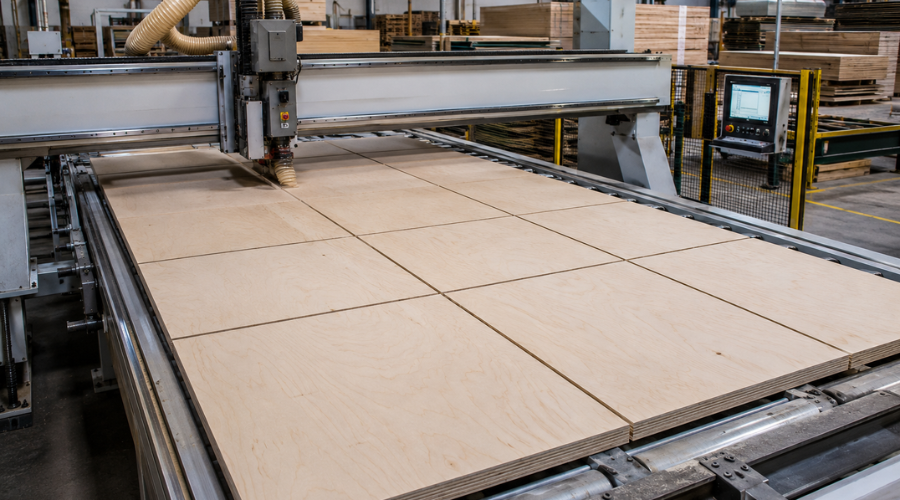
In production, using non-optimized sizes generates additional cutting and adjustment time. This affects line productivity and may require more labor or additional shifts.
In terms of quality, errors resulting from poor dimensional fit can lead to rejections or returns. This not only increases costs but also affects product perception.
Rework is another critical factor. When parts do not fit properly or present defects, manual intervention is required, increasing time and reducing efficiency.
In contrast, when working with custom sizes, these problems are significantly reduced. Production becomes smoother, quality more consistent, and costs more controlled.
From our experience as manufacturers, we see how this decision can make the difference between an optimized process and one full of hidden inefficiencies.
How to choose between standard and custom depending on the application
Choosing between standard vs. custom plywood panel sizes depends directly on the application, production volume, and level of technical requirement.
The problem arises when this decision is made without prior analysis. The cause is often the assumption that standard is sufficient in all cases.
The consequence is the emergence of problems that could have been avoided with proper planning. This includes everything from material waste to failures in the final product.
In simple or low-volume applications, standard sizes may be sufficient. However, in industrial production, where repeatability and efficiency are key, custom solutions are usually the most appropriate option.
It is important to verify aspects such as machining type, required tolerances, behavior under humidity, and dimensional stability. It is also essential to consider subsequent processes such as lacquering or laminating, which can be affected by small deviations.
A common mistake is not validating face quality or not considering how the panel will be processed. This can lead to problems in finishes or material adhesion.
At CATENVA, we advise our clients to define the best solution in each case. We analyze the end use and adapt the panel to ensure optimal performance in production.
The role of the manufacturer in optimizing plywood panel performance
The plywood manufacturer should not be just a supplier, but a technical partner in the industrial process.
The problem is that many companies purchase panels without technical support. The cause is treating the material as a commodity, when in reality it is a critical component of the process.
The consequence is missed optimization opportunities. Without technical analysis, it is difficult to identify improvements in efficiency, quality, or cost.
The manufacturer has the ability to adjust parameters such as dimensions, composition, wood type, and finishes. This allows the panel to be adapted to the specific needs of each application.
In addition, production control and traceability are key factors in ensuring supply consistency. Certifications such as ISO 9001 or PEFC provide assurance in this regard.
At CATENVA, we work as a partner. We not only manufacture plywood panels, but we also analyze each project to offer tailored solutions. We control the process, ensure traceability, and provide technical support at every stage.
If you are evaluating how to improve your production process, it is worth reviewing whether the panel you are using is truly adapted to your application.
At CATENVA, we can help you analyze your case and define the best plywood solution, tailored to your real production needs.
FAQ
When is it advisable to use standard plywood panel sizes?
Standard sizes are only a valid option when the product design is fully aligned with the panel format, which is not always the case in industrial environments. They are suitable when cutting layouts fit without generating significant waste and when machining requirements are low or non-critical. The problem arises when they are used by default: in those cases, hidden costs related to material waste, cutting time, and manual adjustments can clearly exceed initial savings. In repetitive production, this misalignment amplifies, affecting overall line efficiency. That is why it is essential to simulate real panel performance within the production process before making a decision.
How can you calculate whether custom sizes are more cost-effective than standard ones?
You should not compare only the price per panel, but the cost per usable part produced. To do this properly, it is necessary to analyze cutting yield, machining time, waste percentage, and the impact of rework. When working with standard sizes, it is common to lose usable surface and increase intermediate operations. In contrast, with custom sizes, the panel is optimized for the process, reducing cuts, time, and errors. In many cases we analyze at CATENVA, the total cost difference is significant, especially in medium and high production volumes, where small inefficiencies become structural costs.
What specific problems occur in production when plywood panels are not adapted?
The most common issues are not detected during purchasing, but on the production line. Machining deviations, assembly difficulties, and defects in finishes such as lacquering or laminating frequently appear. Edge splintering or inconsistencies caused by internal stresses in the panel are also common when cuts were not initially planned. Operationally, this results in more adjustment time, increased tool wear, and the need for manual intervention. The final outcome is reduced production flow and increased rework, directly impacting costs and delivery times.
Do custom plywood panel sizes also improve final product quality?
Yes, and more directly than is often assumed. When the panel is dimensionally adapted to the final use, stresses, deformations, and accumulated process errors are reduced. This improves dimensional stability, which is critical in products where precision and fit are essential. Additionally, by minimizing additional cuts, face and edge quality are better preserved, facilitating subsequent processes such as lacquering, bonding, or laminating. From an industrial perspective, this reduces rejections and returns, improving product consistency and perceived quality.
Why poplar plywood for painting and laminating is the best option
Table of contents
- What a panel really needs when the final application is painting or laminating
- Why poplar plywood for painting and laminating improves machinability
- The importance of a clear and uniform face in lacquering, melamine and HPL processes
- How dimensional stability affects the final quality of furniture
- The hidden cost of choosing panels based only on price
- What a manufacturer should require from their supplier to avoid rework and downtime
- CATENVA’s role as a technical manufacturer in furniture and wardrobe projects
What a panel really needs when the final application is painting or laminating
In many industrial projects, a common mistake is to assume that a panel for painting or laminating only needs to “look good”. In reality, when the final application involves lacquering or covering with melamine or HPL, the panel must perform consistently across the entire production chain. It must enter machining in stable condition, accept calibration without generating critical deviations, maintain reasonable tolerances, support the adhesion of finishing systems and reach assembly without deformation that compromises the visual quality of the finished product.
Many production issues begin when the final application is not clearly defined from the start. A non-visible structural component is not the same as a light-coloured lacquered door, a side panel that will receive decorative laminate or a front where any shadow, pore irregularity or base defect will eventually become visible. When this definition is missing, purchasing departments often compare panels only by unit price, without considering how each option affects sanding, paint consumption, bonding performance, rejection rates in finishing and later rework.
The consequences appear quickly on the shop floor. A panel with surface irregularities, excessive visual heterogeneity or unstable behaviour requires more preparation, more corrections and more time in a stage that should be repeatable. That reduces productivity, complicates planning and increases the cost of the finished component, even when the initial purchase price appeared more competitive.
The right approach is to treat the panel as a process base rather than as a generic raw material. In that context, poplar plywood for painting and laminating stands out because it combines visual consistency, lightness, machinability and good finishing performance. Depending on the final use, it is advisable to verify face quality, composition, moisture content, tolerances and compatibility with the coating system, but the criterion should remain the same: select the panel that reduces production risk and improves the final result.
Why poplar plywood for painting and laminating improves machinability
Machinability is not always the first commercial argument, but in industrial production it is one of the most profitable. A panel may look acceptable at first glance and still generate repeated issues during cutting, drilling, routing, grooving or edging. When this happens, the problem is rarely limited to the machine itself. In many cases, it starts with the selection of a substrate that was not chosen with the full production process in mind.
In applications such as kitchens, wardrobes and technical furniture, good machinability means that the tool works consistently, edges come out cleaner, chipping is reduced and operators do not need to constantly compensate for material deviations. In panels with dark knots, resin pockets or greater visual and structural irregularity, this consistency can suffer both in machining behaviour and in the uniformity of the final surface finish.
Poplar offers an important advantage here. Its lightweight structure and favourable machining response support more predictable cycles, which is especially relevant in long production runs or repetitive part manufacturing. When the panel performs well in CNC machining and allows cleaner processing, manual corrections are reduced, cycle times are shortened and unnecessary process adjustments are minimised. This directly affects production costs, output per shift and the ability to meet delivery deadlines.
Ignoring machinability can be expensive. A manufacturer may buy a panel that seems competitive on paper, but if it requires more sanding, more edge correction or more part rejection before finishing, the hidden cost spreads across the entire production process. In addition, when machining leaves micro-defects or surface irregularities, the problem becomes even more visible once lacquer or laminate is applied, because the finish does not hide the defect. It reveals it.
That is why machinability should be assessed as a real economic factor. At CATENVA, we work from that technical logic. We do not simply supply plywood. We help define the right solution according to machining requirements, weight, resistance and final use, which is especially important in projects where surface finish directly influences the perceived quality of the final product.
The importance of a clear and uniform face in lacquering, melamine and HPL processes
Aesthetics is not a secondary issue when a panel is going to be painted or laminated. In many industrial processes, a uniform face means less preparation, fewer corrections and greater visual consistency from batch to batch. This is one of the main advantages of poplar compared to alternatives where dark knots, strong colour variation or more problematic areas make it harder to achieve a homogeneous base.
The issue arises when it is assumed that any panel can receive the same surface treatment and deliver the same result. In lacquering, an irregular substrate may require more sealing, more sanding and more coats to reach the quality standard expected by the customer. In HPL or melamine lamination, a less uniform surface may affect the visual cleanliness of the result, the regularity of adhesion or the quality perception in critical areas such as doors, exposed sides or high-visibility interior panels.
The reason is straightforward. Finishing does not work independently from the substrate. The substrate influences adhesion, absorption, uniformity and final visual response. The more stable and consistent the face is, the more controlled the process becomes. On the other hand, when the base already contains defects or marked contrasts, the manufacturer ends up investing additional time to compensate for them. That time is not always visible as a direct unit cost, but it appears in delayed production, lower finishing booth productivity, repeated work and greater difficulty maintaining stable standards across references.
Poplar plywood for painting and laminating is particularly valuable because of that combination of visual clarity and regularity. For kitchen and wardrobe manufacturers, where repeatability matters as much as appearance, this characteristic helps simplify the process and reduce variation. Choosing the right face quality does not only improve appearance. It also reduces rework, avoids inconsistencies between batches and supports finishing performance from the first pass.
Our recommendation is not to simply ask for “a panel for lacquering”. It is better to define from the beginning whether the priority is high-end lacquering, decorative lamination, HPL bonding or a combination of processes. It is also important to validate what level of face quality the component truly needs according to visibility and aesthetic requirements. When that conversation takes place with a manufacturer that controls its own process, the decision stops being generic and becomes aligned with the industrial result the customer is actually trying to achieve.
How dimensional stability affects the final quality of furniture
In furniture, kitchens and wardrobes, dimensional stability is one of those factors that only gets proper attention when it fails. A panel may enter production in apparently good condition and still deform, react poorly to humidity changes or compromise final assembly if it does not remain sufficiently stable. In components that need precise fitting or must support demanding finishes, this affects both visual quality and functionality.
Most problems come from two common mistakes. The first is assuming that all panels behave in the same way and that any substrate can be used in any production environment. The second is failing to control material moisture and storage conditions before machining and finishing. When a panel enters the finishing booth or press out of condition, or when its structure does not provide sufficient stability, tensions, variations and defects begin to appear and later become visible in the assembled part.
Because of its cross-laminated construction, plywood is generally associated with good dimensional stability when it is properly specified for the application. In the case of poplar, this advantage is combined with lightness and ease of transformation, which makes it especially suitable in furniture and interior components where reducing weight matters without compromising consistency. At CATENVA, we insist on adapting the panel to its final use through process control and technical support, because stability depends not only on the raw material itself but also on how it is manufactured, stored and integrated into the customer’s production process.
The recommendation here is clear. Moisture content, storage conditions, tolerances and the actual requirements of the part should be checked before approving a panel reference. Making the right choice at this stage prevents cumulative problems in machining, finishing and assembly. Making the wrong choice may seem like a small deviation at first, but it often turns into unproductive hours, constant adjustments and a loss of confidence from the final customer.
The hidden cost of choosing panels based only on price
One of the most common mistakes in industrial purchasing is to evaluate a panel almost exclusively by price per square metre or per unit. That approach may seem reasonable in a comparison sheet, but it ignores variables that weigh much more heavily in total cost: surface preparation time, consumption of coatings or adhesives, actual machining speed, rejection rates, rework and batch-to-batch consistency.
The reason this happens is often a lack of connection between purchasing, production and quality. When the buyer does not have full visibility of how the panel behaves in the line, the lowest entry price tends to be rewarded even if that option creates more friction on the factory floor. The problem is that friction does not disappear. It simply moves. What is saved during purchasing is later paid in the finishing booth, in the press, in machining, in assembly or even in after-sales claims.
In kitchen or wardrobe components, where the part must look good and be produced repeatedly, an unsuitable base multiplies silent costs. More sanding is needed, more corrections are made, more work is repeated and more material is wasted. Machine time and skilled labour are also consumed in tasks that add no value and only compensate for a poor initial choice. When this happens regularly, the accumulated economic impact easily exceeds any difference in purchase price.
Poplar plywood for painting and laminating can be highly competitive precisely because it helps reduce that hidden cost when it is correctly selected for the application. Its clearer and more uniform face can simplify the lacquering or decorative bonding process, while its machinability supports more stable production cycles. This does not mean that one solution fits every use, because it always depends on the application, but it does mean that in many production lines the best purchase is not the cheapest one. It is the one that creates fewer incidents and greater repeatability.
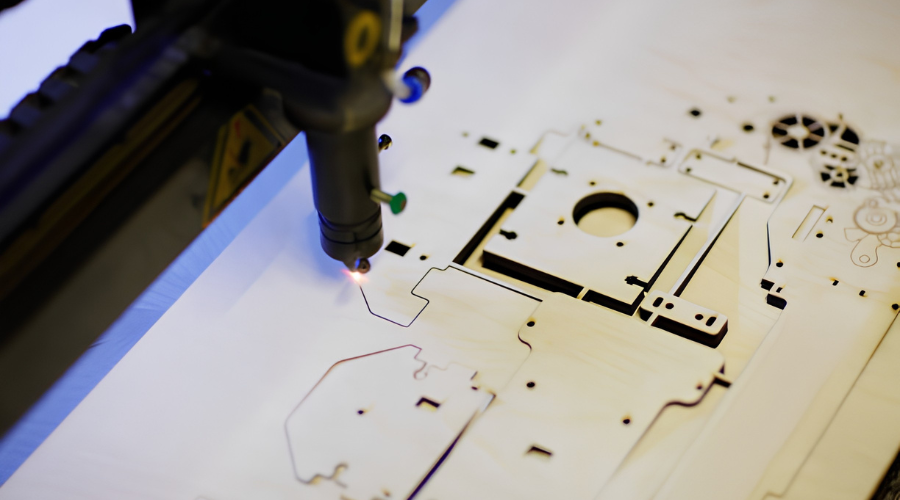
What a manufacturer should require from their supplier to avoid rework and downtime
When a company works with lacquering, HPL or melamine, the plywood supplier should not be limited to delivering a reference code. The supplier should be capable of understanding the application, anticipating risks and supplying a material that is coherent with the production process. The problem is that many incidents begin with an incomplete specification. Thickness and dimensions are requested, but face quality, machining type, aesthetic requirement, expected finishing behaviour and storage or service conditions are not properly defined.
The consequence of that lack of definition is that the panel arrives, enters the production line and then has to be adapted afterwards to a need that was never fully specified. That is when disputes appear over adhesion, tolerances, moisture, batch consistency or defects that were actually foreseeable from the beginning. The result is downtime, rework and unnecessary tension between supplier and customer.
The solution is to work with a technical logic from the outset. A furniture or wardrobe manufacturer should ask not only for plywood, but for suitability to the final use. That means discussing machinability, surface quality, lacquering or laminating requirements, dimensional stability, traceability and supply consistency. It may also involve reviewing whether the project requires certifications or documented quality frameworks, such as quality systems or chain of custody certification, because in many B2B markets that documentation already forms part of the purchasing decision. At CATENVA, this is exactly how we work. We manufacture to specification, control the process, provide technical advice and work with certifications such as ISO 9001, PEFC or FSC where relevant.
The real impact of working this way is very clear. Uncertainty is reduced before production begins, variation in serial manufacturing is minimised and process predictability improves. Instead of solving problems when the part is already in the finishing booth or in assembly, the aim is to prevent those problems from entering the factory in the first place. That is one of the main differences between simply buying plywood and developing a technical solution.
CATENVA’s role as a technical manufacturer in furniture and wardrobe projects
In sectors such as kitchens, wardrobes and technical interior design, it is not enough to find a panel that is merely acceptable. A manufacturer is needed who understands that each application imposes different priorities. Some projects place more weight on lightness, others on finishing quality, others on machinability as the main bottleneck, and others on supply consistency to avoid production stops. The advantage of working with a specialised manufacturer is that this analysis becomes part of the solution.
At CATENVA, we are a plywood manufacturer with industrial experience, custom manufacturing capability, process control, certification and adaptation to customer requirements. This approach is especially useful when a reliable base is needed for painting or laminating, because final quality does not depend on a single isolated factor. It depends on how face quality, machinability, dimensional stability, moisture, tolerances and batch regularity are combined.
In practice, this creates a much more useful relationship for the industrial customer. Instead of buying blindly and correcting later, the manufacturer can define with technical support which panel is needed according to the production process, finishing system and required aesthetic standard. This reduces common mistakes such as ignoring machining conditions, assuming that all faces behave the same in lacquering, failing to validate moisture or choosing only by price. It also improves the final quality of the finished product and reduces rework that affects both margins and delivery times.
When the goal is to manufacture kitchen furniture or wardrobes with a clean, homogeneous and repeatable presentation, poplar plywood for painting and laminating becomes an especially efficient base. Not only because of how it looks, but because of everything it simplifies behind the scenes: machining, preparation, adhesion, stability and productivity. And when it is sourced from a manufacturer that controls process and traceability, the decision becomes stronger both technically and economically.
Conclusion
At CATENVA, we know that choosing the right poplar plywood for painting and laminating directly affects production performance. A uniform face, good machinability and proper dimensional stability help reduce defects, rework and unnecessary costs.
As manufacturers, we see every day how poor panel selection can lead to more adjustments, lower finishing quality and more production issues. That is why we develop solutions adapted to lacquering, melamine lamination or HPL bonding, defining each panel according to final use, machining requirements and the expected aesthetic standard. If your company is looking for a more reliable solution for painting and laminating applications, our technical team can help define the most suitable plywood according to the real needs of your project.
FAQ
1. Is poplar plywood always the best option for painting and laminating?
It depends on the application, the finishing system and the required aesthetic standard. In many kitchen, wardrobe and technical interior projects, it stands out because of its clear face, visual uniformity and good machinability, but face quality, thickness and final use conditions should always be verified.
2. Why does machinability affect total production cost so much?
Because a panel that machines well reduces chipping, manual corrections, unproductive time and unnecessary process wear. Even if its purchase price is not the lowest, it can be more cost-effective by reducing rework and rejected parts.
3. What problems appear if panel moisture is not properly controlled?
Deformation, dimensional variation, adhesion issues and assembly or finishing problems may occur. In painting and laminating processes, poor moisture control affects both final quality and production stability.
4. What is the value of working with a manufacturer like CATENVA instead of buying a standard reference?
It means access to custom manufacturing, process control, technical support, traceability and the ability to adapt the plywood to the final application. This helps define the right solution and reduces incidents in machining, finishing and assembly.
The hidden cost of voids: why “laser grade” matters in precision manufacturing
When a “cheap” plywood panel fails, it rarely does so because of what is visible on the surface. The problem is usually inside: voids between veneers, hidden knots, irregular overlaps, or areas with uneven density that do not appear on the outer face… until it’s time to cut, machine, or assemble.
In precision manufacturing (laser cutting, CNC, die cutting, fine milling, industrial marquetry, or tight-tolerance production runs), these internal defects become a real cost: rejected parts, extra adjustment time, irregular burning, breakage during assembly, or even batches that simply cannot be delivered.
That is why a concept increasingly relevant to industry, design, and manufacturing exists: “laser grade” plywood. It is not just a “nice name”: it is a practical way of referring to plywood designed to provide uniform internal layers, minimal voids, reliable bonding, and stable behavior when the process demands precision.
What are “voids” and “hidden knots” in plywood and why do they matter so much?
In plywood panels, quality does not depend only on the visible face. It also depends on the quality of the inner veneers. In lower-grade plywood, it is common to find:
- Internal voids (gaps between veneers)
- Hidden knots covered by outer layers
- Irregular internal overlaps and joints
- Areas with variable thickness due to poorly calibrated veneers
- Bonding defects (insufficient adhesive, poor distribution, or inadequate pressing)
These defects often go unnoticed until the panel is subjected to a demanding process: laser cutting, aggressive machining, secondary bonding, bending, lacquering, or tight-tolerance assembly.
The hidden cost of voids in cheap plywood
The cost is not just the price of the panel. The real cost is measured in:
1) Part loss in laser cutting and CNC
In precision manufacturing, every panel must behave predictably. When plywood contains internal voids or density variations, cutting stops being uniform.
In laser cutting, an internal void can cause overburning in areas with less mass, as the beam encounters less resistance. At the same time, density changes between layers may generate irregular edges, kerf (cut width) variations, and loss of definition in small geometries or fine details.
In CNC machining, something similar happens. Internal voids can cause unexpected chipping, especially on edges or delicate areas. In parts with narrow ribs, tabs, or precision joints, an internal discontinuity may cause breakage during machining or reduce structural strength once the part is finished. The result is scrap, rework, and reduced productivity.
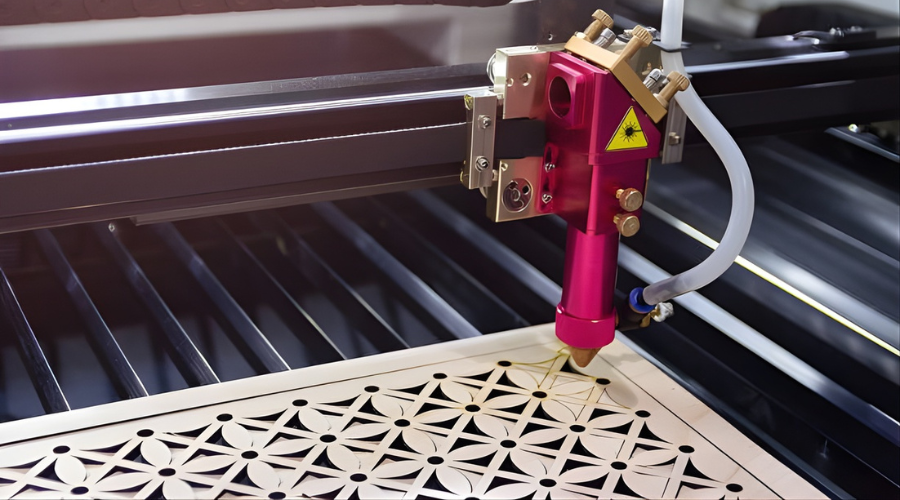
2) More setup time and less repeatability
When the material is not uniform, the process is no longer repeatable. In laser cutting, it is common for power and speed parameters to work correctly in one area of the panel and fail in another due to internal variations. This forces additional calibration time, more power and speed tests, and parameter adjustments every time the batch changes.
In industrial environments, where efficiency depends on process stability, this lack of repeatability directly impacts costs. More setup time means less productive time, greater uncertainty in delivery schedules, and increased difficulty in standardizing manufacturing. What initially seemed like savings in panel cost ultimately translates into higher operational costs.
3) Assembly and durability issues
A panel with internal voids may pass cutting without visible defects but fail later during assembly. If a void coincides with a structurally critical area, joints may give way, tabs may not fit properly, or certain points may not provide the expected strength.
In applications requiring mechanical fasteners, a screw may encounter an area with insufficient real density, leading to reduced anchoring capacity. Additionally, in demanding or load-bearing uses, edge breakage may occur, compromising the durability of the final product. This affects both perceived quality and service life.
4) Inconsistent finishes
The internal uniformity of plywood also affects surface finishing. When areas of different density or irregular internal layers exist, the absorption of lacquers, varnishes, or stains may vary. The result is uneven tones, absorption differences, or “patchy” areas that require additional coats to compensate.
Why “laser grade” plywood is key for precision manufacturing
Laser-grade plywood is essential in precision manufacturing because it is designed to provide stable and uniform performance in demanding processes such as laser cutting and CNC machining.
This type of panel aims to ensure:
- Internal layers with fewer defects
- Minimal voids and open knots
- Stable and repeatable thickness across the entire panel
- Reliable bonding that reduces the risk of delamination
The result is a material with predictable cutting and machining performance, allowing constant parameters to be maintained and scrap to be reduced. Ultimately, it means working with a panel that supports the production process instead of forcing you to compensate for material irregularities.
How hidden knots and voids affect laser cutting of plywood
Laser cutting is especially sensitive because it “reads” the material in real time: when density changes, results change.
Typical problems with plywood containing voids in laser cutting
- More burned edges in softer areas or near voids
- Incomplete cuts in denser areas requiring rework
- Marks or shadows on the underside due to irregular beam exit
- Increased carbonization in areas with inconsistent bonding or internal defects
- Small parts breaking when removed from the panel due to lack of real “body”
If your production depends on time per part, any deviation multiplies.
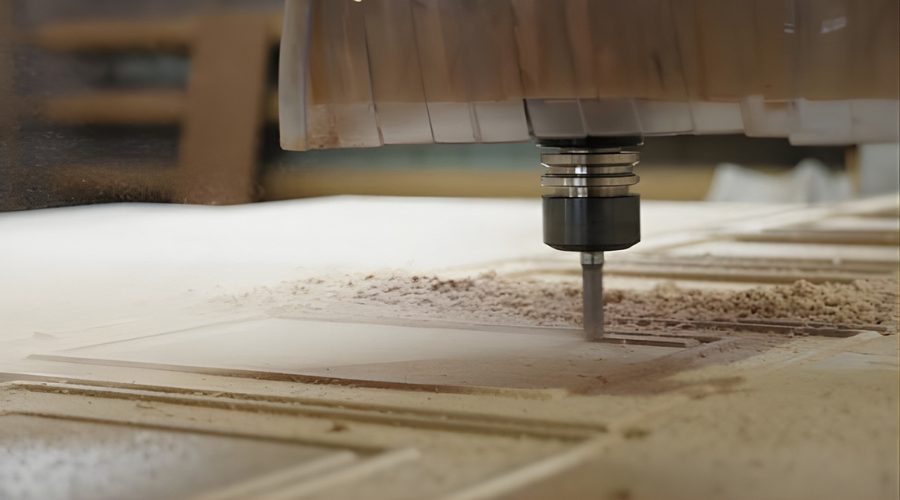
Veneer selection: why the process matters to avoid irregular internal layers
In plywood manufacturing, a critical part of quality comes from veneer quality and uniformity. When an internal veneer has defects, the panel inherits that problem.
In general terms, minimizing voids and internal variations requires a robust process that typically includes:
1) Raw material selection and defect control
Plywood quality begins with raw material selection. An internal veneer with structural defects directly transfers that problem to the final panel. A rigorous selection process significantly reduces the presence of large knots, cracks, resin pockets, or degraded areas that can become internal voids or weak points. Controlling these defects from the beginning results in a more uniform and stable core, improving reliability in machining, cutting, and final use.
2) Properly controlled veneer peeling
The peeling process is crucial to ensuring uniformity and continuity. Well-controlled peeling directly influences thickness uniformity, fiber continuity, dimensional stability, and bonding surface quality.
If internal veneers show thickness variations, “bridges” or areas without real contact between layers may form, increasing the risk of internal voids and causing less homogeneous bonding. In precision manufacturing, this regularity is essential to avoid unpredictable behavior during cutting or machining.
3) Core composition and internal joint control
In panels where the core is composed of multiple pieces or internal joints, controlling alignment, overlaps, repairs, and veneer continuity makes a critical difference.
Careful core composition maintains internal cohesion and reduces discontinuities that affect strength or cutting finish. Poor composition may generate irregularities only detected during machining or assembly. Ultimately, core control distinguishes a panel that merely “meets minimum standards” from one suitable for precision manufacturing processes.
The critical difference between interior and exterior adhesives in plywood for laser cutting
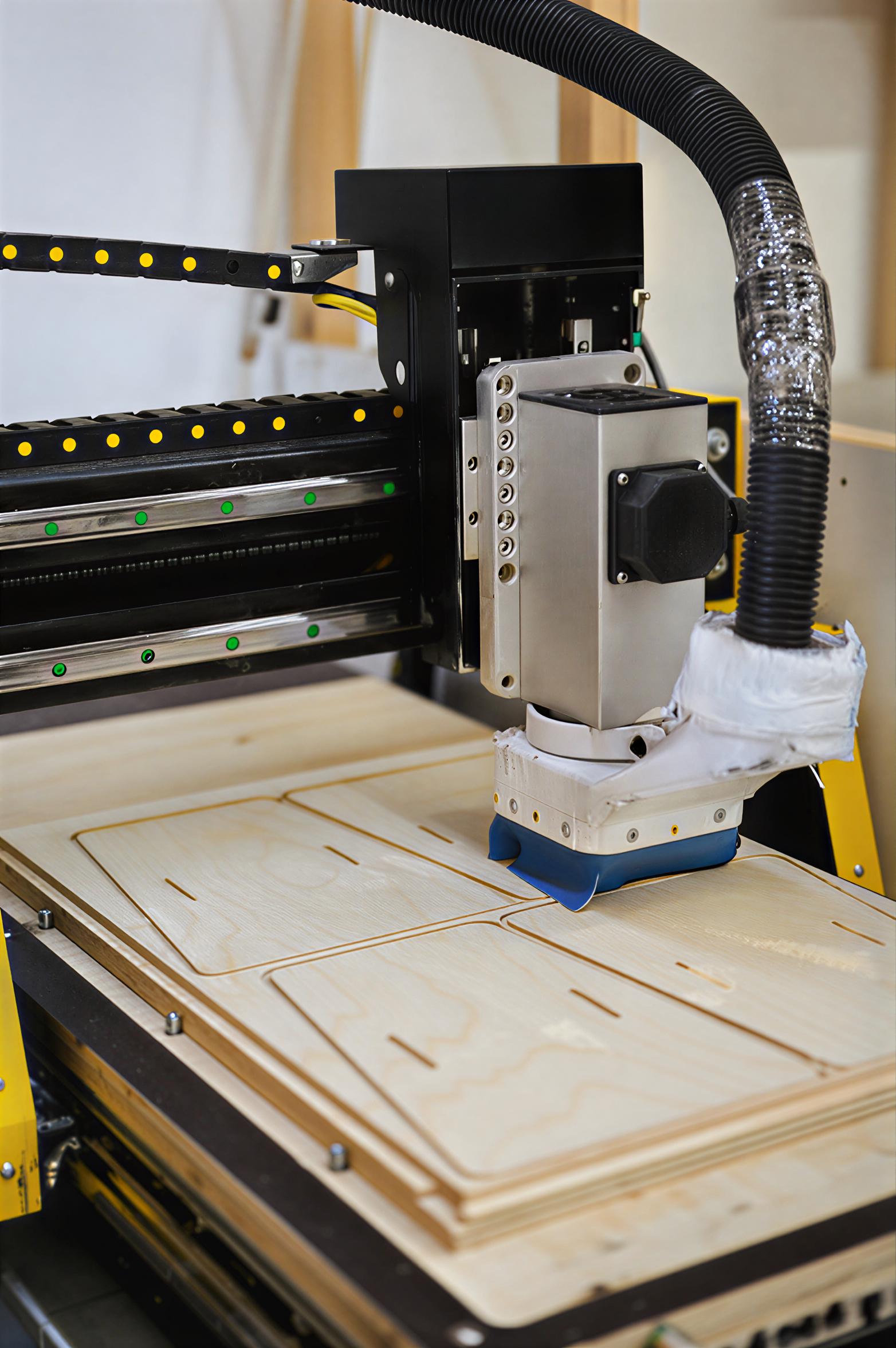 This point is often underestimated, yet it is decisive in manufacturing.
Why does the type of adhesive matter in laser-cutting plywood?
Because the adhesive influences:
- Cohesion between veneers (delamination resistance)
- Behavior under humidity or temperature changes
- Performance when the part is machined or subjected to stress
In general:
- Interior adhesives: designed for dry indoor environments. Not intended for prolonged exposure to moisture or demanding conditions.
- Exterior adhesives: formulated to provide greater resistance to moisture and harsher conditions, maintaining bonding integrity in more demanding scenarios.
How does this translate in practice?
In laser or CNC processes, inadequate bonding may create issues that directly affect final part quality and durability. Layer separation may appear after cutting, especially in thin or delicate geometries, as well as edges that “open” or show delamination.
In addition, bonding not suited to the intended use may reduce panel stability under humidity changes during storage or transport, increasing the risk of deformation or later assembly issues. When the goal is precision manufacturing with consistent results, selecting the correct adhesive type according to final use is not a secondary detail, but an essential reliability requirement.
CATENVA and plywood for precision manufacturing
When a customer looks for plywood for laser cutting, they are not simply buying a panel: they are buying repeatability, edge quality, reduced scrap, and stable processes.
If your production depends on precision, the most efficient approach is to work with a supplier who can help you select:
- The right panel (more uniform core)
- The optimal thickness for your design
- The appropriate bonding type depending on final use (interior/exterior)
- Samples to validate your cutting process and parameters
If you are experiencing irregular cuts, scrap due to voids, or unstable results between batches, contact CATENVA. Tell us about your application (laser, CNC, production runs, tolerances), and we will guide you in choosing the most suitable plywood for your manufacturing process.
Frequently asked questions about plywood voids and “laser grade”
What are internal voids in plywood?
They are gaps between internal veneers that may result from core composition defects, irregular joints, or insufficient contact/bonding. They can affect strength, finishing, and cutting performance.
Why can cheap plywood have “hidden knots”?
Because internal layers may contain defects that are covered by outer veneers. The issue becomes visible during machining, cutting, or when tight tolerances are required.
What does “laser grade” mean?
It generally refers to plywood designed for demanding processes such as laser cutting, featuring greater core uniformity, fewer voids, and more stable and repeatable performance in manufacturing.
Does adhesive type influence laser cutting?
Yes. Adhesive affects layer cohesion and panel stability. In thin parts or delicate geometries, inadequate bonding can increase delamination and edge failures.
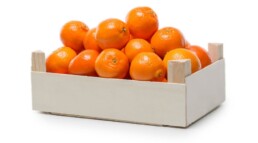
The end of single-use plastic: navigating the EU Packaging Regulation (PPWR) with certified wood
European packaging legislation is undergoing a profound transformation. The new EU Packaging and Packaging Waste Regulation, known as the PPWR (Packaging and Packaging Waste Regulation), marks a turning point in the way packaging is designed, manufactured and marketed, especially single-use and lightweight packaging.
For many companies, this change represents a source of uncertainty. For others, it is a clear opportunity to get ahead of the market. In this new scenario, wood—and in particular packaging and components made from wood—positions itself as a natural and legally secure solution in response to the restrictions that directly affect single-use plastics.
At CATENVA, as manufacturers of poplar plywood and MDF panels for packaging applications, we work with companies that require real guarantees of regulatory compliance, traceability and recyclability. This article explains what the PPWR involves, why it particularly affects lightweight packaging, and how certified wood becomes a solid, future-ready alternative.
What is the PPWR and why does it change the rules of the game?
The PPWR replaces the previous packaging directive and becomes a regulation with direct application in all EU Member States. This means less room for national interpretation and stricter, common requirements for all operators in the European market.
One of the main objectives of the PPWR is to drastically reduce packaging waste—especially single-use packaging—and to promote truly recyclable and circular systems. To achieve this, the regulation introduces:
- Explicit restrictions on the use of single-use plastic packaging
- Requirements for real, not merely theoretical, recyclability
- Obligations to reduce packaging weight and volume
- Traceability and material justification requirements
These measures directly affect lightweight packaging, particularly those weighing less than 1.5 kg, which have historically relied on plastic due to cost, lightness and ease of processing.
The PPWR directly challenges the use of single-use plastics in this segment and demands alternatives that meet three key conditions: functionality, recyclability and long-term legal security.
In this context, wood emerges as a highly suitable solution. It not only meets the technical requirements of packaging, but also naturally aligns with the principles of the regulation: renewable material, recyclable, traceable and with an environmental performance that is well understood and accepted by European legislation.
Wood as a “natural technology” applied to packaging
Talking about wood in packaging is no longer about a traditional solution, but about a natural technology with very specific technical properties.
Wood offers characteristics that make it particularly attractive compared to other materials:
- Hygroscopic behaviour, capable of regulating ambient humidity and protecting the contents
- Natural antibacterial properties, widely documented, which reduce risks in certain applications
- Structural stability, even in well-designed lightweight packaging
- Compatibility with modern industrial processes, from machining to automation
These properties make wood a functional material, not just a sustainable one. In an increasingly strict regulatory environment, this technical approach is key to ensuring the medium- and long-term viability of packaging solutions.
Regulatory certainty: wood versus regulatory uncertainty
One of the major challenges of the PPWR is the uncertainty it creates around certain materials. Many packaging solutions that comply with current regulations may become obsolete in just a few years.
Wood, however, starts from a privileged position. It is a material fully recognised by European legislation, with established recycling streams, broad social acceptance and a stable regulatory framework.
In addition, the use of certified wood provides an extra layer of legal and commercial security, especially in markets where traceability and documented compliance are increasingly required.
Certifications that reinforce the viability of wood packaging
GROW: guarantee of origin and responsible management

The GROW certification verifies the responsible origin of the wood and its traceability throughout the supply chain. In a context such as the PPWR, where the origin of materials is becoming increasingly important, this type of certification becomes a strategic asset.
For packaging manufacturers, working with certified panel suppliers means reducing risks and simplifying validation processes with clients and authorities.
ECOWOOX: full recyclability of wood packaging
 ECOWOOX is a European certification that guarantees that wood packaging is 100% recyclable and can be disposed of through established recycling systems.
Although ECOWOOX is aimed at wood packaging manufacturers, CATENVA plays a key role as a validated supplier of plywood and MDF for this system.
This means that packaging manufacturers using components supplied by CATENVA can access ECOWOOX certification with the assurance that the materials meet the required standards, guaranteeing the full recyclability of the final packaging.
CATENVA as a strategic supplier in the new regulatory landscape
In a changing regulatory environment, choosing the right suppliers is no longer just a matter of price—it becomes a strategic decision.
At CATENVA, we manufacture poplar plywood and MDF panels designed specifically for packaging applications, with a clear focus on stability, consistent quality and regulatory compliance.
Our knowledge of both the material and the regulatory framework allows us to support companies through this transition, offering solutions that not only comply with current regulations but are also prepared for what lies ahead.
Frequently asked questions about the PPWR and wood packaging
Does the PPWR ban all single-use plastic packaging?
Not immediately, but it introduces very strict restrictions, especially for lightweight and non-essential packaging, accelerating its replacement.
Does wood meet the PPWR recyclability requirements?
Yes. Wood is a fully recyclable material recognised by European regulations, especially when supported by certifications such as ECOWOOX.
What role does CATENVA play in ECOWOOX certification?
CATENVA is a validated supplier of plywood and MDF for ECOWOOX-certified packaging, enabling manufacturers to certify their products using our materials.
Is wood packaging suitable for lightweight applications?
Yes. With proper design and materials such as poplar plywood, it is possible to develop lightweight, functional and regulation-compliant packaging.
Why is anticipating the PPWR a competitive advantage?
Because it allows companies to adapt products, processes and materials before restrictions become mandatory, avoiding urgent adaptation costs and strengthening market positioning.
The advantage of poplar plywood in caravan design
The design of caravans and motorhomes has evolved in recent years towards increasingly efficient, lightweight solutions that comply with new regulatory requirements. In this context, the choice of materials used in the vehicle interior plays a key role, especially when total weight directly affects fuel consumption, emissions classification, and the available equipment.
Poplar plywood has become one of the most efficient options for interior furniture and panelling in caravans, thanks to its light weight, stability, and versatility. At CATENVA we work with this material specifically to meet the technical requirements of the caravan and motorhome sector.
Weight: a determining factor in motorhome design
The maximum authorised mass (MAM) is one of the main constraints in the design of any motorhome. Exceeding this limit not only leads to legal issues, but also affects vehicle performance, fuel consumption, and safety.
In many projects, interior furniture and linings represent a significant portion of the total vehicle weight. The use of excessively dense materials reduces the margin available for other essential elements and limits equipment options.
Weight reduction with poplar plywood
One of the main advantages of poplar plywood is its low density compared to other boards commonly used in recreational vehicle interiors.
Depending on the design and the number of interior components, using poplar plywood can result in a weight reduction of between 100 and 200 kg across the interior of a motorhome or caravan. This reduction is achieved without compromising dimensional stability or mechanical performance in non-structural applications.
This weight saving is particularly relevant in:
- Furniture modules
- Cabinets and drawers
- Interior panelling
- Beds and auxiliary components
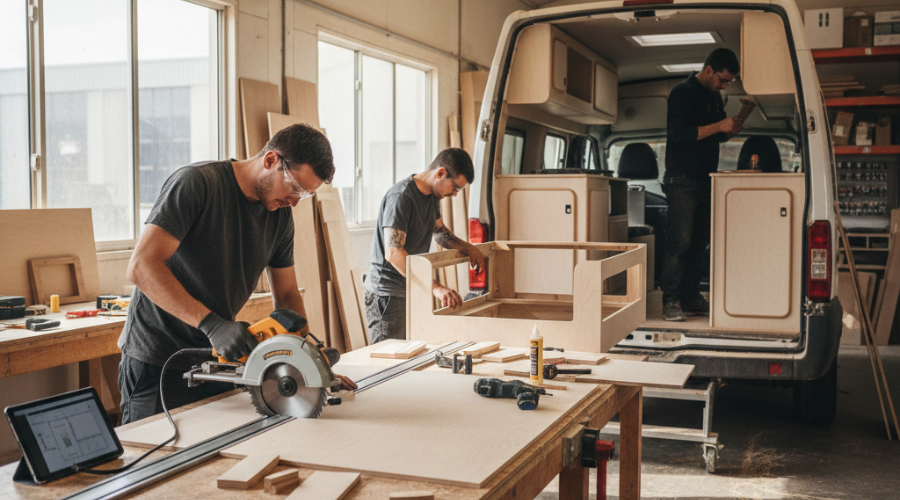
Lower weight, better efficiency and emissions classification
Reducing the total weight of the vehicle has a direct and measurable impact on its overall efficiency. Every kilogram removed from the interior of a caravan or motorhome reduces the effort required from the engine during acceleration, climbing gradients, and prolonged driving, directly improving overall performance.
Lower weight results in:
- Reduced fuel consumption, especially on long journeys or under constant load conditions
- Lower emission levels, due to the reduced energy required to move the vehicle under equivalent conditions
- Improved driving dynamics, with greater stability, increased agility, and reduced wear on mechanical components
In the current context—defined by increasingly strict environmental regulations and greater end-user awareness of efficiency and environmental impact—the use of lightweight materials has become strategically important. Selecting poplar plywood for interior applications allows manufacturers to improve the vehicle’s environmental classification without modifying the mechanical base, acting directly on the overall weight.
As a result, interior optimisation through lightweight solutions becomes an effective tool for developing recreational vehicles that are more efficient, sustainable, and aligned with present and future market demands.
Improved strength-to-weight ratio thanks to poplar plywood
One of the key strengths of poplar plywood is its excellent strength-to-weight ratio, a particularly valuable characteristic in interior design applications. This material makes it possible to significantly reduce the weight of interior components without sacrificing stability, rigidity, or performance in use.
The weight savings achieved with poplar plywood free up margin within the maximum authorised mass (MAM), providing greater flexibility when defining equipment levels and the final vehicle configuration. This optimisation is essential in projects where every kilogram counts and available margins are limited.
The freed-up weight can be allocated to elements such as:
- Electrical systems and batteries, increasingly in demand in autonomous vehicles
- Solar panels, improving energy self-sufficiency
- Larger-capacity water tanks
- Comfort and technology equipment, enhancing the end-user experience
Thanks to this improved strength-to-weight ratio, manufacturers can develop more complete and functional vehicles without compromising regulatory compliance, safety, or overall performance, while maintaining an optimal balance between design, efficiency, and functionality.
Custom dimensions to reduce waste and optimise processes
At CATENVA, we offer the possibility of supplying poplar plywood in custom formats and thicknesses adapted to each project. This level of customisation allows manufacturers to:
- Optimise cutting layouts
- Reduce offcuts and material waste
- Improve production efficiency
- Minimise overall material loss
This approach is particularly valuable in bespoke projects or short production runs, which are common in the caravan and motorhome sector.
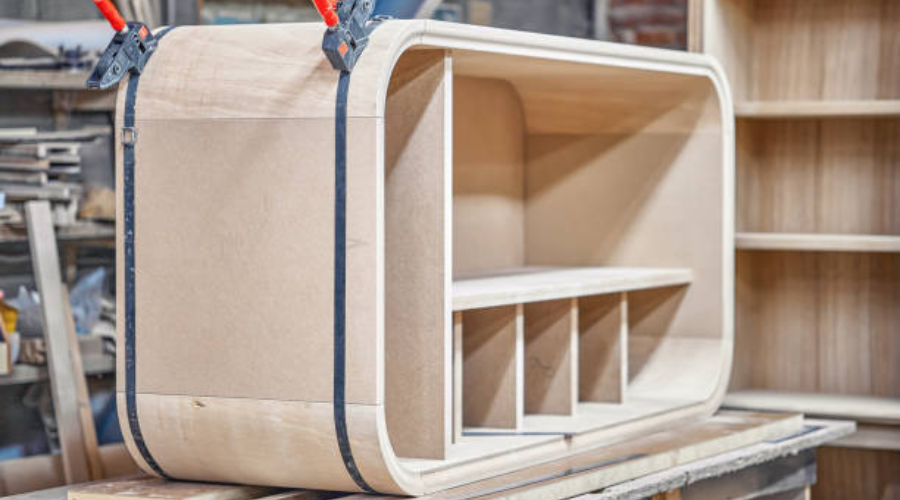
Applications of poplar plywood in caravan interiors
Poplar plywood is a highly versatile material for the design and manufacture of caravan and motorhome interiors. Its light weight, dimensional stability, and ease of machining allow it to be adapted to a wide range of construction solutions, both in standard designs and bespoke projects.
It is commonly used in many interior components, including:
- Technical furniture, such as kitchen modules, cabinets, drawers, and bed structures, where weight reduction is critical
- Decorative panelling, providing a uniform finish and allowing the integration of different surface treatments and coatings
- Partition elements, used to divide spaces without adding excessive weight
- Lightweight interior components, intended for auxiliary or functional parts where every gram matters
- Manufacturer-specific linings, produced in formats and thicknesses tailored to the specific requirements of each project
Thanks to this versatility, poplar plywood can be integrated into different assembly systems and finishing solutions, consistently maintaining an optimal balance between lightness, strength, and stability, and offering manufacturers a reliable technical solution for recreational vehicle interiors.
CATENVA poplar plywood: a technical solution for the caravaning sector
At CATENVA, we combine in-depth material knowledge with controlled manufacturing processes and technical support, helping our clients select the most suitable poplar plywood for each application.
Our goal is to provide solutions that reduce weight, improve vehicle efficiency, and optimise manufacturing processes, adapting to the specific needs of the caravan and motorhome sector.
If you need more information, please feel free to contact us by clicking here.

Food safety in logistics: why certified poplar plywood matters for agro-industry
In the agri-food supply chain, food safety is not limited to production and processing stages. It extends to every element involved in handling, storage, transport, and distribution. Any material that comes into direct or indirect contact with food products can become a critical risk point if it does not meet the appropriate safety requirements.
Within this context, materials used in logistics and industrial packaging play a decisive role. Choosing certified poplar plywood for food contact applications is not a secondary decision, but a strategic one that directly affects food safety, regulatory compliance, traceability, and market confidence.
This article explains why using food contact safe wood is essential for the agro-industry, the risks associated with non-certified wood, the natural suitability of wood when properly manufactured, and the added value of AIDIMME food contact safety certification—a less widely known but highly relevant certification in this sector.
The risks of using non-certified wood in food logistics
Wood is widely used in agro-industrial logistics due to its strength, versatility, and efficiency. However, not all wood products are suitable for food-related applications. Using non-certified wood can create significant risks.
One of the main concerns is microbiological contamination. Wood that has not been manufactured under controlled conditions may harbor bacteria, fungi, or mold, especially in environments with humidity fluctuations or temperature changes, which are common in food logistics.
Another critical risk is the presence of chemical residues. Adhesives, treatments, or manufacturing substances used in non-food-grade plywood may migrate into food products or their packaging, compromising food safety.
Moisture control is also a key factor. Poorly dried wood or plywood without proper industrial processing may deform, retain moisture, and become difficult to clean, increasing hygiene risks.
Finally, the absence of certification usually means lack of traceability, which can create serious issues during audits, inspections, or quality claims.

Why poplar plywood is a suitable solution for the agro-industry
When manufactured under controlled industrial processes and supported by specific certification, poplar plywood offers several advantages for agro-industrial logistics.
Poplar wood is lightweight, stable, and homogeneous, making it ideal for packaging, supports, platforms, and logistics components. Its multilayer structure, when properly pressed and bonded, minimizes deformation and surface defects where contaminants could accumulate.
These natural properties only become truly valuable when combined with food contact certification, which confirms that the plywood is suitable for use in sensitive food-related environments.
The natural suitability of wood for food contact applications
Properly manufactured and certified wood is a chemically stable and low-reactivity material. When produced using food-safe adhesives and controlled processes, it does not release harmful substances during contact with food or food packaging.
Wood also offers excellent mechanical performance, protecting products during handling and transport. This stability is especially important in agro-industrial logistics, where product integrity must be preserved throughout the supply chain.
However, these benefits are only guaranteed when the wood has been specifically assessed and certified for food contact use.
AIDIMME certification: a key differentiator for food contact safety
The AIDIMME food contact safety certification is particularly relevant for the agro-industry, although it remains relatively unknown outside technical environments. This certification evaluates the suitability of wood-based materials for direct or indirect contact with food.
For certified poplar plywood, AIDIMME confirms compliance with strict criteria related to substance migration, hygienic behavior, and compatibility with food-contact applications.
Holding this certification provides clear advantages:
- Documented food safety compliance
- Greater confidence during audits and inspections
- Improved traceability and regulatory alignment
- Clear differentiation from non-certified alternatives
Only a limited number of plywood manufacturers hold this certification, making certified poplar plywood from Catenva a highly valuable solution for agro-industrial applications.
Applications of certified poplar plywood in agro-industrial logistics
Certified food grade plywood is particularly recommended for:
- Packaging and crates for fruits and vegetables
- Logistic platforms and handling systems
- Storage and transport components in food supply chains
- Industrial packaging with direct or indirect food contact
In all these cases, certified wood reduces risks and supports compliance with food safety management systems.
Integrating certified wood into food safety systems
For agro-industrial companies, using certified plywood requires a structured approach. This includes defining technical specifications aligned with food contact requirements, working with suppliers that provide proper documentation, and ensuring material traceability throughout logistics operations.
Partnering with a manufacturer that understands food industry requirements simplifies compliance and enhances operational safety.
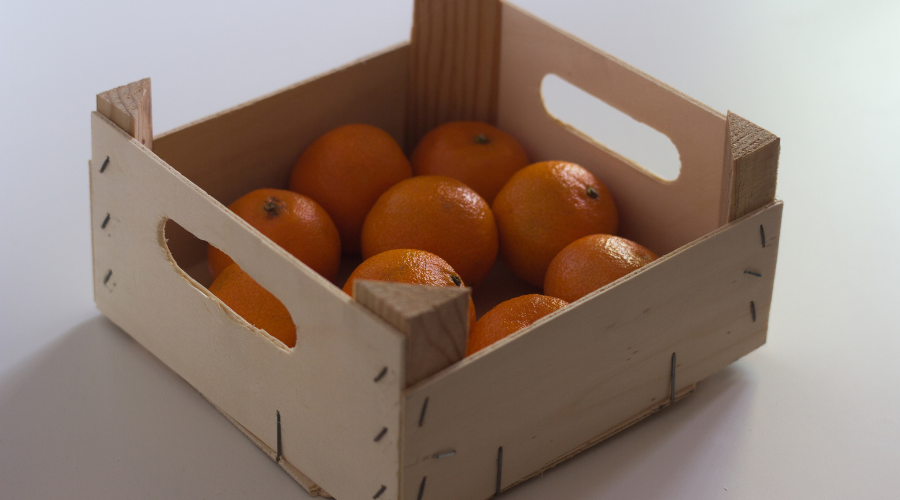
Catenva: certified poplar plywood for the agro-industry
At Catenva, we manufacture poplar plywood certified for food contact safety, in accordance with AIDIMME requirements. Our approach combines strict process control, careful raw material selection, and technical support to deliver reliable solutions for the agro-industry.
This certification—still rare in the plywood sector—reinforces our commitment to safety, quality, and suitability for demanding food logistics environments.
Food safety in logistics goes beyond the final product. It begins with every material used throughout the supply chain. Choosing certified poplar plywood for food contact applications is a preventive decision that reduces risks, supports regulatory compliance, and protects brand reputation.
In a sector where trust is essential, certified wood makes a measurable difference.
Frequently Asked Questions about food-grade plywood and food safety
What is food grade poplar plywood?
Food grade poplar plywood is manufactured under controlled conditions and certified to ensure it does not release harmful substances when in direct or indirect contact with food products.
Why should non-certified wood be avoided in food logistics?
Non-certified wood may pose risks related to contamination, chemical migration, moisture retention, and lack of traceability, which can compromise food safety and regulatory compliance.
Is wood a safe material for food contact?
Yes, when properly manufactured and certified. Wood is naturally stable, but only certified products can guarantee food safety suitability.
What is the difference between standard plywood and food grade plywood?
Standard plywood is designed for general use, while food grade plywood is manufactured and certified specifically for food contact applications, with stricter controls and documentation.
What does AIDIMME food contact certification guarantee?
It confirms that the plywood meets strict requirements related to hygienic behavior and substance migration, making it suitable for food-related applications.
Is food contact certification mandatory for wooden packaging?
Regulations require materials to be safe for food contact, but certification provides documented assurance and simplifies audits and inspections.
Where is certified poplar plywood typically used?
It is commonly used in fruit and vegetable packaging, agro-industrial logistics, storage systems, and industrial food packaging.
How does certified plywood support food safety audits?
It provides traceable documentation and technical validation, reducing non-conformities during inspections and audits.
Why choose a specialized manufacturer like Catenva?
Because Catenva combines certified manufacturing, technical expertise, and sector-specific knowledge to deliver reliable food contact safe wood solutions.
Why is poplar plywood suitable for agro-industrial packaging?
Poplar plywood offers lightness, stability, and excellent mechanical performance, making it ideal for agro-industrial packaging when properly certified.
Everything you need to know about plywood export from the EU
For importers, distributors, and industrial buyers, understanding how plywood export from the EU works — and what differentiates European suppliers — is essential to ensuring long-term supply stability and product reliability.
In this article, we explain the key aspects of plywood export from the EU, including quality standards, logistics requirements, and why choosing an experienced manufacturer like Catenva makes a critical difference in international trade.
Why EU plywood is a global benchmark
European plywood manufacturers operate under some of the strictest industrial and environmental regulations in the world. This regulatory framework ensures that plywood exported from the EU meets high standards in terms of structural stability, bonding quality, dimensional accuracy, and traceability of raw materials.
In addition, European producers have invested heavily in controlled manufacturing processes, advanced pressing technologies, and precise moisture management. As a result, EU plywood is widely regarded as a stable, predictable, and technically reliable product — key factors for buyers operating in demanding industrial environments.
For international customers, sourcing plywood from the EU is not only a matter of quality, but also of confidence. The consistency of supply, documentation transparency, and compliance with international norms reduce risks throughout the supply chain.
What makes EU plywood competitive in international markets
One of the main competitive advantages of EU plywood lies in the strict control of raw materials. European manufacturers work primarily with carefully selected species such as poplar and pine, ensuring uniform veneers and balanced panel construction. This results in improved dimensional stability, reduced warping risk, and better performance during transport and final use.
Another critical factor is the adherence to European technical standards. EU plywood is produced in accordance with harmonized EN standards, which define requirements for bonding strength, moisture resistance, and intended end-use conditions. These standards provide international buyers with a clear technical reference, making EU plywood easier to specify, approve, and integrate into projects.
Finally, European suppliers are known for their ability to offer customized solutions. From specific thicknesses and formats to tailored packaging for export, EU manufacturers can adapt their products to the technical and logistical needs of each destination
market.
Types of plywood commonly exported from the EU
Among the most exported products is poplar plywood, valued for its lightweight structure, smooth surface, and versatility. It is widely used in furniture manufacturing, interior applications, caravan production, and industrial packaging where weight reduction is
essential without compromising stability.
Pine plywood is another key export product, especially for construction and structural applications. Its mechanical strength and durability make it suitable for load-bearing uses, formwork, and industrial environments where higher resistance is required.
In addition to these standard products, EU manufacturers also supply technical plywood solutions, designed for specific industrial uses. These include customized panel constructions, controlled moisture content, and precise tolerances required by professional
buyers.
Quality standards and certifications for EU plywood export
Compliance with international standards is one of the strongest assets of EU plywood. Most exported panels carry CE marking, which confirms conformity with European construction product regulations. Standards such as EN 636 (plywood classification by
service class) and EN 314 (bonding quality) are commonly referenced in export documentation.
For plywood used in packaging and logistics, phytosanitary compliance is also essential. While plywood itself is generally exempt from ISPM 15 requirements, associated wooden packaging and pallets must comply with international phytosanitary regulations to
avoid customs issues.
Proper certification and documentation ensure smoother customs clearance and reduce the risk of delays or disputes at destination ports.
Export requirements when shipping plywood from the EU
Exporting plywood from the EU involves careful coordination between manufacturing, documentation, and logistics. Accurate commercial invoices, packing lists, certificates of origin, and customs declarations are essential to ensure a seamless export process.
Packaging plays a crucial role in protecting plywood during long-distance transport. Panels must be properly stacked, wrapped, and protected against moisture exposure. Container loading techniques, including ventilation and correct weight distribution, are key to preserving panel flatness and quality throughout the journey.
Incoterms selection also has a significant impact on export operations. Terms such as EXW, FOB, CIF, or DAP define responsibilities for transport, insurance, and customs clearance, and must be clearly agreed upon between buyer and supplier to avoid
misunderstandings.
Common challenges in plywood export and how to avoid them
One of the most common issues in plywood export is moisture-related damage during transit. Long shipping times, changing climates, and improper container conditions can lead to panel deformation if moisture levels are not properly controlled before shipment.
Documentation errors are another frequent challenge. Incomplete or incorrect paperwork can cause customs delays, additional costs, or even shipment rejection. Working with an experienced exporter significantly reduces these risks.
Quality claims can also arise when buyers receive products that do not match technical expectations. Clear specifications, controlled manufacturing, and transparent communication are essential to prevent disputes and ensure long-term commercial relationships.
Ensuring plywood stability during international transport
Stability begins at the factory. Proper drying, controlled moisture content, and balanced panel construction are fundamental to ensuring that plywood maintains its shape during transport. Equally important is the use of export-adapted packaging systems that protect panels from humidity and mechanical stress.
Container loading practices, including proper stacking, spacing, and ventilation, further contribute to maintaining product integrity until delivery.
Why choosing the right EU plywood supplier matters
Not all suppliers offer the same level of control, expertise, and accountability. Working directly with a manufacturer — rather than a trading intermediary — provides greater transparency, technical support, and consistency in product quality.
A reliable EU supplier offers not only plywood panels, but also technical advice, documentation support, and long-term supply reliability, which are essential for professional buyers operating in international markets.
Catenva: your trusted EU plywood export partner
At Catenva, we manufacture plywood in the EU using carefully selected poplar and pine, under strict quality and moisture control processes. Our experience in international markets allows us to support clients throughout the entire export process, from product
selection to logistics coordination.
We work closely with our customers to ensure that each shipment meets technical requirements, destination regulations, and transport conditions. Our commitment to quality, stability, and professional service makes Catenva a reliable partner for plywood export
worldwide.
Conclusion: exporting plywood from the EU with confidence
Exporting plywood from the EU offers clear advantages in terms of quality, compliance, and reliability. However, success depends on choosing the right supplier, understanding export requirements, and ensuring proper handling throughout the supply chain.
With its controlled manufacturing processes, export expertise, and customer-focused approach, Catenva provides international buyers with the confidence and consistency they need when sourcing plywood from the European Union.
For professional plywood export solutions, partnering with Catenva means building long-term value — panel by panel.
Frequently Asked Questions about plywood export from the EU
Why is plywood exported from the EU considered high quality?
Plywood exported from the EU is manufactured under strict European standards that regulate raw material selection, bonding quality, moisture control, and dimensional stability.
These regulations ensure consistent performance, traceability, and compliance with international requirements, making EU plywood a trusted choice in global markets.
What types of plywood are most commonly exported from the EU?
The most commonly exported types are poplar plywood and pine plywood. Poplar plywood is valued for its lightweight structure and versatility, while pine plywood is preferred for structural and industrial applications due to its strength and durability. Technical plywood solutions tailored to specific uses are also widely exported.
Does EU plywood comply with international standards?
Yes. EU plywood typically complies with harmonized European standards such as EN 636 and EN 314, and many products carry CE marking. These standards facilitate acceptance in international markets and simplify technical approval processes for importers
and project managers.
What documentation is required to export plywood from the EU?
Standard export documentation includes a commercial invoice, packing list, certificate of origin, and customs declarations. Depending on the destination country and application, additional technical documentation or certifications may also be required. An experienced exporter ensures all paperwork is accurate and complete.
How is plywood protected during international transport?
Plywood exported from the EU is typically packaged to protect it from moisture and mechanical stress. Proper stacking, wrapping, and container loading techniques are essential to maintain panel flatness and quality during long-distance shipping.
Can EU plywood be customized for export markets?
Yes. Many EU manufacturers, including Catenva, offer customized plywood solutions such as specific thicknesses, panel formats, moisture content levels, and packaging adapted to the requirements of different destination markets.
What are the main risks when importing plywood internationally?
The most common risks include moisture-related damage, documentation errors, customs delays, and quality claims. These risks are significantly reduced when working with an experienced EU manufacturer that controls production and export processes from start to finish.
Why is it better to work directly with an EU plywood manufacturer rather than a trader?
Working directly with a manufacturer ensures better quality control, technical support, transparent documentation, and long-term supply reliability. Manufacturers like Catenva can also provide tailored advice on logistics, specifications, and compliance, which is crucial in B2B international trade.
How does Catenva support international plywood exports?
Catenva supports international customers by combining EU-based manufacturing, strict quality control, export-ready packaging, and technical assistance. This integrated approach ensures that plywood arrives stable, compliant, and ready for use in the destination market.